
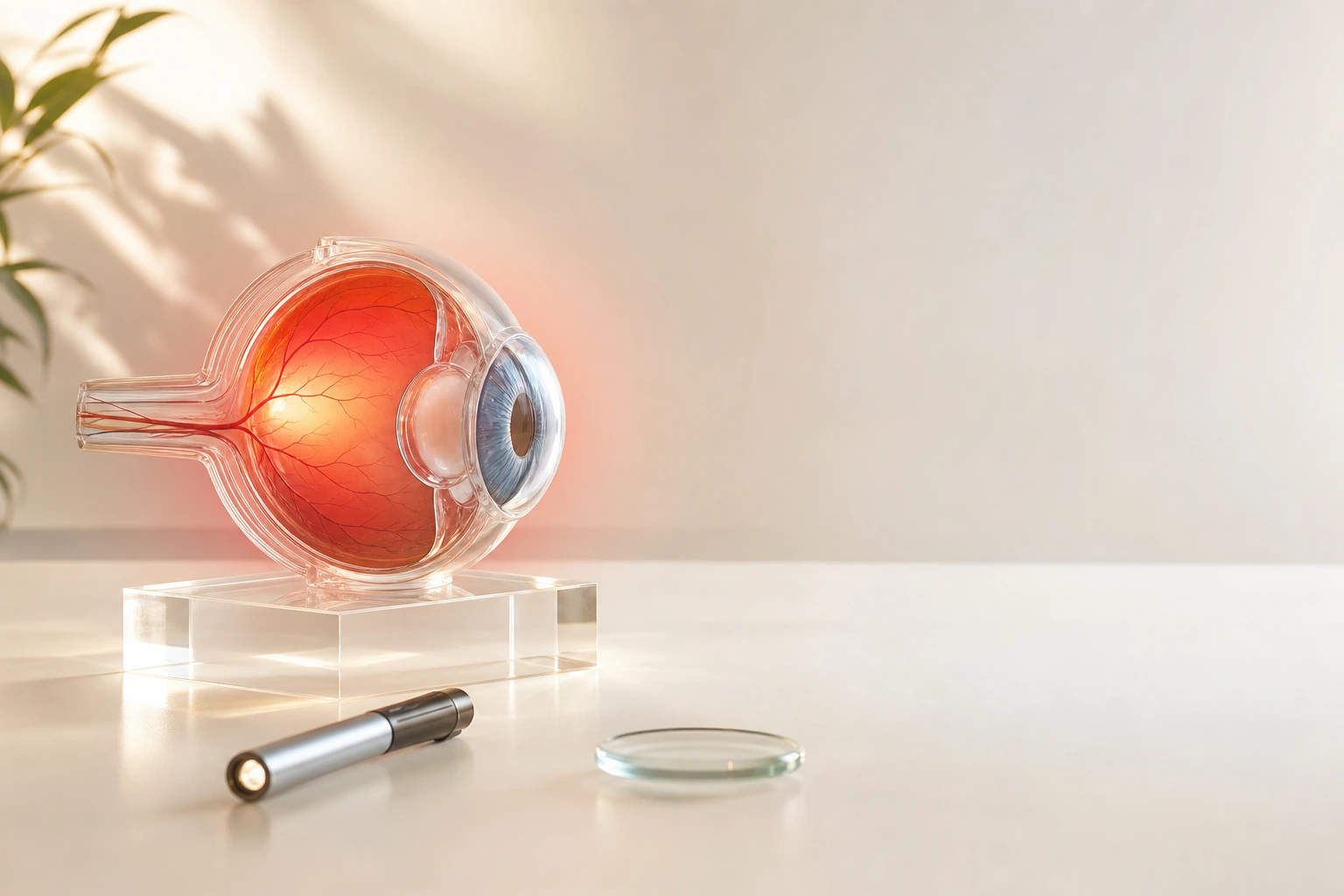
You wake up and your eye hurts. Maybe it is a dull pressure behind your eyes that will not quit. Maybe it is a sharp sting every time you blink. You grab your phone and start Googling, and within minutes, the results range from "it is probably nothing" to "you could go blind."
That gap between harmless and serious is exactly where the anxiety lives. Your vision feels irreplaceable, so any unexplained pain near your eyes can feel alarming.
Here is the good news: most eye pain has a common, treatable cause. This guide will help you understand what might be behind your symptoms, recognize when something needs urgent attention, and know exactly what to do next. Whether you just need a screen break or a comprehensive eye exam, you will leave here with a clear plan.
Table of Contents
- What Does Your Eye Pain Feel Like?
- What Are the Most Common Causes of Eye Pain?
- Is Your Eye Pain Serious?
- What Can You Do for Eye Pain Relief Right Now?
- What Happens During an Eye Exam for Eye Pain?
- Why Does Early Detection Matter for Eye Pain?
- What Are the Most Common Questions About Eye Pain?
- Sources
What Does Your Eye Pain Feel Like?
Not all eye pain is the same, and the way your pain feels can tell you a lot about what is causing it. Eye doctors generally divide eye pain into two categories.
What Is Surface (Ocular) Eye Pain?
Surface eye pain happens on or near the front of your eye. You might describe it as a burning or stinging sensation, a gritty or sandy feeling (like something is stuck in your eye even when nothing is there), or an itchy irritation that gets worse when you rub your eyes.
This type of pain is commonly associated with dry eye, a corneal scratch, conjunctivitis (pink eye), or a foreign object on the eye's surface. Surface pain often feels worse with blinking and tends to improve with lubricating eye drops.
What Is Deep (Orbital) Eye Pain?
Deep eye pain is felt behind or inside the eye. Patients often describe it as a dull aching or throbbing, a sensation of pressure pushing outward from inside the eye, or a pain behind the eye that radiates toward the forehead.
This type of pain can be linked to sinus inflammation, migraines, glaucoma, or optic nerve conditions. Deep pain typically does not respond to eye drops and often needs professional evaluation to identify the cause.
Understanding which type you are experiencing can help you communicate more effectively with your eye doctor and guide the conversation toward the right diagnosis faster.
What Are the Most Common Causes of Eye Pain?
Here are the most frequent reasons your eyes might be hurting. For each one, we will start with what it actually feels like before explaining the clinical cause.
Can Screen Time Cause Eye Pain?
If your eyes ache, burn, or feel tired after hours at a computer, you are far from alone. Research published in BMJ Open Ophthalmology found that 65% of US adults report symptoms of digital eye strain, including eye pain, headaches, and blurred vision. That number jumps to 75% for people using two or more screens at the same time.
Digital eye strain happens because you blink less when focusing on a screen, sometimes reducing your blink rate by as much as half. This accelerates tear evaporation and dries out your eye's surface. At the same time, the focusing muscle inside your eye (the ciliary muscle) stays locked in a near-focus position for extended periods, leading to fatigue and discomfort.
The reassuring part: digital eye strain does not cause permanent damage to your eyes. It is highly treatable with simple behavioral changes, which we cover in the relief section below.
Does Dry Eye Cause Pain?
If you wake up with gritty, uncomfortable eyes every morning, your first thought might be an infection. More often, that morning discomfort is a sign of dry eye disease. Overnight, your tear film can evaporate or become unstable, leaving the surface of your eye exposed when you first open your eyes.
Dry eye affects approximately 20 million Americans, with global prevalence estimates ranging from 5% to 34% depending on the population studied. Key risk factors include advanced age, being female, prolonged screen use, low-humidity environments, and contact lens wear.
Symptoms go beyond grittiness. Dry eye can cause burning, stinging, redness, watery eyes (yes, paradoxically), and a general tired feeling in your eyes. Georgia's changing seasons can make dry eye symptoms fluctuate, with winter heating and summer air conditioning both reducing indoor humidity.
Can Sinus Problems Cause Eye Pain?
Many patients assume eye pain always means an eye problem, but your sinuses are a surprisingly common culprit. The eye socket (orbit) is surrounded on three sides by sinus cavities. When those sinuses become inflamed or infected, you can feel pressure and pain directly around and behind your eyes.
Sinus-related eye pain typically feels like a deep pressure that gets worse when you bend over or move your head. It is often accompanied by nasal congestion, postnasal drip, or facial tenderness across your cheeks and forehead. The key distinction: sinus pain is usually felt in both eyes and is closely tied to head position.
If your eye pain comes with cold-like symptoms, it may be worth talking to your primary care doctor about your sinuses before assuming the problem is with your eyes.
Can Contact Lenses Cause Eye Pain?
Contact lenses that are dirty, poorly fitting, or worn too long are one of the most common causes of eye pain that patients bring to our office. Overwearing lenses, especially sleeping in contacts that are not approved for overnight use, can starve the cornea of oxygen and create tiny abrasions on the surface.
Warning signs that your lenses are the issue: pain that improves shortly after you remove your contacts, redness that appears after lens insertion, or a feeling that something is "stuck" even after you take them out. If you notice any of these patterns, give your eyes a break from lenses and schedule a visit so we can check your corneal health.
What About Allergies and Irritants?
Seasonal allergies are a frequent cause of eye discomfort in Metro Atlanta. Pollen, dust, pet dander, and mold trigger an inflammatory response that makes your eyes itch, water, and burn. Irritants like cigarette smoke, air pollution, and chlorine from pools can produce similar symptoms.
The distinguishing feature of allergy-related eye pain: itching is usually the dominant symptom, and both eyes are affected equally. If one eye is significantly worse than the other, or if you have thick discharge rather than clear watering, an infection may be more likely than allergies.
Is Your Eye Pain Serious?
Most eye pain does not require emergency care. But certain symptoms should prompt you to seek help right away, because the conditions behind them can cause permanent vision loss if they are not treated quickly.
When Should You Go to the Emergency Room for Eye Pain?
Seek emergency or same-day eye care if you experience any of the following:
- Sudden, severe eye pain that comes on rapidly and intensely
- Sudden vision loss or blurring in one or both eyes
- Pain after eye trauma (being hit in the eye, a chemical splash, a puncture)
- Pain with nausea or vomiting (can indicate dangerously high eye pressure)
- Halos or rainbows around lights combined with eye pain
- Eye redness with severe pain (not the mild redness of allergies or fatigue)
If you are unsure whether your symptoms qualify as an emergency, call your eye doctor's office. Most practices, including ours, can advise you over the phone and get you in quickly if needed.
What Is Acute Angle-Closure Glaucoma?
Acute angle-closure glaucoma is one of the most time-sensitive eye emergencies. It happens when the drainage system inside the eye becomes suddenly blocked, causing intraocular pressure to spike rapidly. Without treatment, it can cause permanent vision loss within hours.
Symptoms include sudden severe eye pain, headache, nausea, vomiting, blurred vision, and halos around lights. Women are two to four times more likely to experience acute angle-closure, and it is most common between ages 55 and 65.
The CDC estimates that 4.22 million Americans have glaucoma, and about half do not know it. While most glaucoma develops gradually and painlessly (open-angle type), the acute angle-closure form announces itself with unmistakable pain. If you experience these symptoms, go to the emergency room or call your eye doctor immediately.
What Does It Mean if Your Eye Hurts When You Move It?
Pain that gets worse when you move your eyes side to side or up and down deserves attention. This specific symptom is a hallmark of optic neuritis, an inflammation of the optic nerve.
The Mayo Clinic describes optic neuritis pain as a dull ache behind the eye that worsens with eye movement. It typically affects one eye and may come with temporary vision loss or dimming, color desaturation (colors look washed out), or flashing lights with eye movement.
Optic neuritis is associated with multiple sclerosis. About 50% of people who experience optic neuritis will develop MS over their lifetime. However, optic neuritis also has other causes and does not automatically mean you have MS.
This is not typically an emergency-room symptom on its own, but you should schedule an appointment with an eye doctor within one to two days if you notice pain with eye movement, especially if it comes with any vision changes.
What Can You Do for Eye Pain Relief Right Now?
While you wait for your eye appointment (or while you figure out whether you need one), these evidence-based strategies can help manage mild to moderate eye discomfort.
How Does the 20-20-20 Rule Help Eye Pain?
The American Academy of Ophthalmology recommends the 20-20-20 rule for anyone who spends extended time on screens: every 20 minutes, look at something at least 20 feet away for at least 20 seconds.
This works because it allows the ciliary muscle inside your eye to relax from its sustained near-focus position. Think of it like unclenching a fist you have been holding tight for an hour. The AAO also recommends positioning your screen about 25 inches (arm's length) from your face, with the center of the screen slightly below eye level.
Do Warm Compresses Help with Eye Pain?
Yes, especially for pain related to dry eye, blepharitis (eyelid inflammation), or general eye fatigue. Place a clean, warm (not hot) cloth over your closed eyes for five to ten minutes.
The warmth helps loosen clogged oil glands along your eyelid margins. These glands produce the oily outer layer of your tear film, which prevents tears from evaporating too quickly. When the glands are blocked, your tear film breaks down faster and your eyes dry out. Warm compresses can provide noticeable relief, particularly in the morning or after a long stretch at the screen.
Should You Use Artificial Tears?
Preservative-free artificial tears are safe for most people and can provide quick relief for dryness, mild irritation, and post-screen discomfort. They work by supplementing your natural tear film and rehydrating the eye surface.
One important note: avoid eye drops marketed as "redness relievers" or "get the red out" formulas. These contain vasoconstrictors that shrink blood vessels temporarily but can cause rebound redness with regular use, making your symptoms worse over time.
If you find yourself reaching for artificial tears more than three or four times a day, that is a sign your dry eye may benefit from a more targeted treatment plan. Schedule a visit so your eye doctor can look at the underlying cause.
What Happens During an Eye Exam for Eye Pain?
Many people put off scheduling an eye exam because they are not sure what to expect. Knowing what the process involves can make it feel less intimidating.
What Will Your Eye Doctor Check?
A comprehensive eye exam for eye pain typically includes:
- Visual acuity test (reading the eye chart) to check for any vision changes
- Slit lamp exam using a specialized microscope to examine the front surface of your eye, including the cornea, iris, and lens
- Intraocular pressure (IOP) measurement to screen for glaucoma. This is part of every comprehensive exam, even if you came in for something else entirely
- Optic nerve evaluation to check for signs of damage or inflammation
- External eye exam to evaluate your eyelids, tear film, and surrounding structures
None of these tests are painful. The entire process is designed to systematically identify what is causing your discomfort so your doctor can recommend the right treatment.
Why Does the Eye Doctor Dilate Your Eyes?
Dilating drops widen your pupil so the doctor can get a clear view of the retina and optic nerve at the back of your eye. This is the only way to detect many conditions that affect the inside of the eye, including retinal tears, diabetic eye disease, and optic nerve damage from glaucoma.
The drops take about 20 to 30 minutes to reach full effect, and your near vision may be blurry for a few hours afterward. Bringing sunglasses to your appointment can help with light sensitivity on the drive home.
Why Does Early Detection Matter for Eye Pain?
Eye pain can sometimes be the first sign of a condition that would otherwise go unnoticed until vision is already affected. Glaucoma is the clearest example.
How Many People Have Glaucoma Without Knowing It?
According to the CDC, about 50% of people with glaucoma do not know they have it. The disease often develops gradually with no symptoms in its early stages, silently damaging the optic nerve. By the time patients notice vision changes, the damage is irreversible.
The numbers are stark: an estimated 4.22 million Americans are living with glaucoma, and the undiagnosed rate is even higher in some communities. Research from Prevent Blindness found that 81% of glaucoma cases among Hispanic and Latino Americans and 73% among non-Hispanic White Americans go undiagnosed and untreated.
The encouraging part: if found early, glaucoma can be treated and managed before vision loss occurs. A comprehensive eye exam catches what you cannot feel. That is why regular visits to your eye doctor matter even when your eyes feel fine, and especially when they do not.
What Are the Most Common Questions About Eye Pain?
Can Eye Strain Cause Permanent Damage?
No. While digital eye strain can cause real discomfort, including pain, headaches, and blurred vision, it does not cause lasting structural damage to your eyes. The symptoms are temporary and resolve with rest, screen breaks, and proper workspace ergonomics. The AAO confirms that screen use does not permanently harm your eyes.
Why Do Your Eyes Hurt More by Evening?
Accumulated screen time, reduced blinking, and progressive tear film evaporation all compound throughout the day. By evening, your eyes have been working harder and drying out more than at any other point. Air conditioning and heating systems further reduce indoor humidity. If evening eye pain is a regular pattern for you, it strongly suggests digital eye strain or dry eye as the underlying cause. Both are very treatable.
Should You See an Eye Doctor or Go to Urgent Care?
For most eye pain, an optometrist or ophthalmologist is the best first call. Eye doctors have the specialized equipment and training to examine the internal structures of your eye. General urgent care clinics can handle basic concerns but typically lack slit lamps and the tools needed for a thorough eye evaluation.
Go to the ER or urgent care if: you have experienced eye trauma (a blow, a chemical splash, or a puncture), you are having sudden severe pain with nausea or vision loss, or you cannot reach your eye doctor after hours.
Can Eye Pain Be a Sign of Something Else in Your Body?
Yes. Eye pain is not always about the eye itself. Sinus infections commonly cause pressure and pain behind the eyes. Migraines frequently involve eye pain as a primary symptom. Optic neuritis can be an early sign of autoimmune conditions like multiple sclerosis. Even high blood pressure can affect the blood vessels in your eyes.
This is one of the reasons a comprehensive eye exam is so valuable. Your eye doctor can often identify signs of systemic health conditions that show up in the eye before they produce symptoms elsewhere in the body.
Ready to Address Your Eye Pain?
Eye pain is your body's signal that something needs attention. Whether it is as straightforward as adjusting your screen habits or as important as catching early signs of glaucoma, understanding your symptoms is the first step toward feeling better.
At Classic Vision Care, Dr. Mital Patel and our team provide comprehensive eye exams that go beyond checking your prescription. We evaluate the full health of your eyes, from the tear film on the surface to the optic nerve at the back, so we can find the cause of your discomfort and create a treatment plan that works.
We serve patients at two convenient Metro Atlanta locations in Marietta (East Cobb) and Kennesaw.
This article is for informational purposes only and does not constitute medical advice. Please consult with an eye care professional for diagnosis and treatment.
Sources
- Sheppard, A.L. and Wolffsohn, J.S. (2018). "Digital eye strain: prevalence, measurement and amelioration." BMJ Open Ophthalmology. pmc.ncbi.nlm.nih.gov/articles/PMC6020759
- American Academy of Ophthalmology. "Computers, Digital Devices, and Eye Strain." aao.org/eye-health/tips-prevention/computer-usage
- Centers for Disease Control and Prevention. "About Glaucoma." cdc.gov/vision-health/about-eye-disorders/glaucoma
- National Eye Institute. "Types of Glaucoma." nei.nih.gov/learn-about-eye-health/glaucoma/types-glaucoma
- Mayo Clinic. "Optic Neuritis: Symptoms and Causes." mayoclinic.org/diseases-conditions/optic-neuritis
- Cleveland Clinic. "Eye Pain: Causes, Common Conditions and Treatment." clevelandclinic.org/health/symptoms/17796-eye-pain
- Mayo Clinic. "Acute Sinusitis: Symptoms and Causes." mayoclinic.org/diseases-conditions/acute-sinusitis
- Epidemiology and Risk Factors of Dry Eye Disease (2024). Clinical Optometry. pmc.ncbi.nlm.nih.gov/articles/PMC11433936
- American Academy of Ophthalmology. "What Is Glaucoma?" aao.org/eye-health/diseases/what-is-glaucoma
- Prevent Blindness. "New Study Finds Higher Prevalence of Glaucoma Than Previously Estimated." preventblindness.org/new-glaucoma-prevalence-study