
Reviewed by Dr. Mital Patel, OD
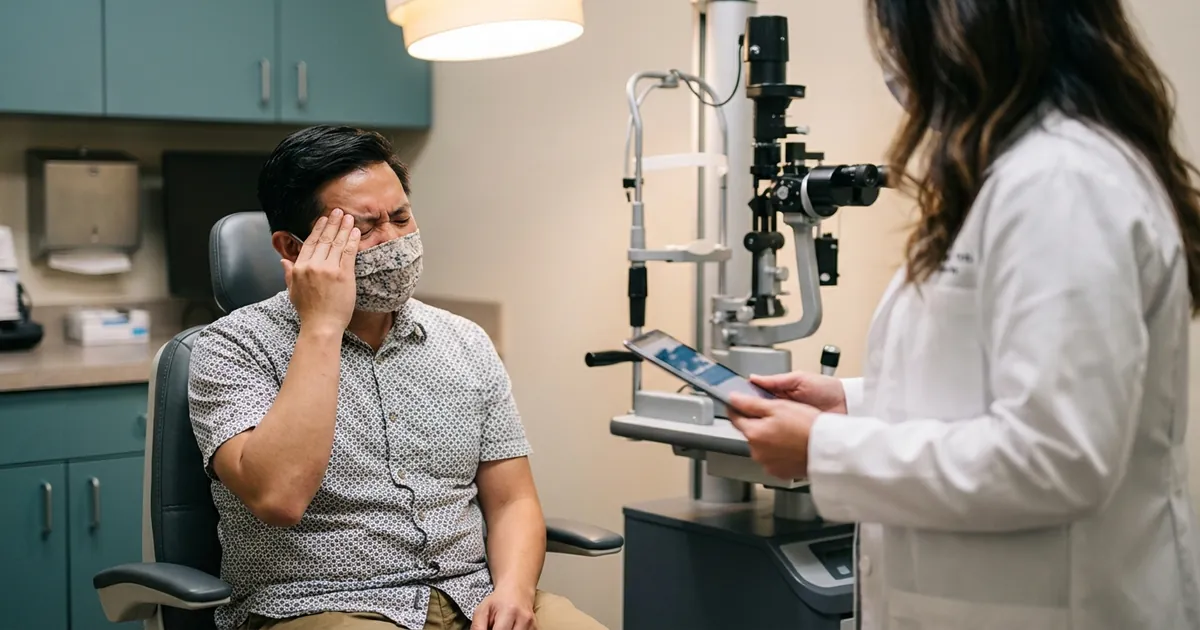
If you are searching for eye pain in one eye, especially pain behind the left eye, you are probably trying to answer two questions at once: What could this be, and how worried should I be right now? That reaction is reasonable. Pain near one eye feels specific, personal, and hard to ignore.
The reassuring part is that many cases are tied to common issues such as dry eye, digital eye strain, migraine, sinus pressure, or a prescription that needs updating. The part that matters is knowing when the symptom pattern points to something more urgent. At Classic Vision Care, we regularly see patients who assume the pain must mean something severe, only to learn that a careful eye exam gives them a much clearer answer.
This patient guide explains what eye pain in one eye can mean, when the pattern deserves same-day care, what you can safely do at home, and what to expect if you schedule an eye exam. If you want a broader overview of eye pain in general or a related discussion of pain behind the eye, those resources can help as well.
Table of Contents
- What do you need to know about eye pain in one eye?
- When is pain behind the left eye an emergency?
- What are the most common causes of eye pain in one eye?
- What can you do at home while you wait to be seen?
- What should you expect at an eye exam for eye pain in one eye?
- What are the benefits of getting eye pain in one eye evaluated?
- Frequently Asked Questions
- Ready to schedule an appointment today?
- Sources
What do you need to know about eye pain in one eye?
Is pain behind the left eye always an eye problem?
No. Eye pain in one eye can come from the eye surface, from structures inside the eye, from nearby sinus tissues, or from a headache disorder that happens to localize near one eye. That is why the same phrase, "pain behind my left eye," can describe very different problems.
MedlinePlus notes that many things can cause pain in or around the eye, including dry eye, contact lens problems, sinus problems, eye strain, headache, inflammation, and acute glaucoma. In other words, the side of the pain is only one clue, not the whole answer.
The more useful question is this: what else is happening with the pain? That is where the triage becomes clearer.
Which symptoms change the urgency right away?
If the pain is paired with reduced vision, a very red eye, halos around lights, nausea or vomiting, marked light sensitivity, or a sudden severe headache, the symptom moves out of the "monitor it for a few days" category. Those combinations need faster evaluation.
The timeline matters, too. A dull ache that builds after hours of close work is different from pain that starts suddenly and escalates. Pain that improves when you step away from screens is different from pain that gets worse when light hits the eye or when you notice blur, dimness, or a red eye.
As a simple rule, location helps, but the company the symptom keeps is what usually determines the urgency.
When is pain behind the left eye an emergency?
Which red flags mean you should go to the ER now?
Go to the ER now, or seek immediate emergency help, if pain behind the left eye comes with any of the following:
- sudden vision loss or a dramatic drop in vision
- severe eye pain with nausea or vomiting
- a red eye plus blurry vision or halos around lights
- eye trauma or chemical exposure
- a sudden severe headache, especially with stiff neck, fever, confusion, or loss of consciousness
The National Eye Institute states that angle-closure glaucoma can cause sudden symptoms such as intense eye pain, blurry vision, nausea, and a red eye, and it advises going to your doctor or an emergency room right away. MedlinePlus also warns that headache with a stiff neck, fever, confusion, loss of consciousness, or pain in the eye may signal a more serious problem that needs immediate medical care.
If you only remember one line from this section, remember this one: severe pain plus vision change, or severe pain plus nausea and a red eye, should not be watched at home.
When should you seek a same-day eye exam?
Same-day or next-day eye care is appropriate when the pain is strong, keeps returning, is not improving, or comes with decreased vision, light sensitivity, redness, swelling, discharge, or a pressure sensation in the eye.
MedlinePlus specifically says that if the pain is severe, does not go away, or reduces your vision, you should seek medical attention immediately. The National Eye Institute uveitis page adds another important pattern: blurry vision, eye pain, red eyes, and sensitivity to light should prompt urgent evaluation because untreated inflammation can threaten vision.
The practical takeaway is that not every painful eye needs the ER, but the number of truly routine painful-eye patterns is smaller than many patients assume.
What are the most common causes of eye pain in one eye?
Could dry eye be causing the pain?
Yes. Dry eye is easy to underestimate because people often expect it to feel only gritty or dry. In real life, it can also feel like irritation that radiates into the brow, forehead, or eye socket, especially after reading, driving, or screen use.
The National Eye Institute reports that dry eye is common and affects nearly 16.4 million Americans. The same page lists burning, scratchy sensation, blurry vision, red eyes, and light sensitivity among the symptoms. Those symptoms do not always feel "surface level" to patients. Many people simply describe them as eye pain in one eye.
If your symptoms are worse in air conditioning, after long screen sessions, or later in the day, dry eye moves higher on the list of likely explanations. If this sounds familiar, our related page on digital eye strain in a screen-filled world may also be relevant because dry eye and screen habits often overlap.
Could digital eye strain or a prescription issue be the reason?
Absolutely. This is one of the most common explanations for eye pain in one eye that starts gradually and gets worse with near work. The discomfort may feel like pressure behind the eye, brow ache, or a low-grade headache that builds through the workday.
The American Optometric Association reports that the average American worker spends seven hours a day on the computer and lists blurred vision, headaches, and dry-eye symptoms among the common effects of computer vision syndrome. The same page explains that uncorrected vision problems can increase the severity of digital-eyestrain symptoms.
MedlinePlus reinforces that eye strain may be caused by the wrong eyeglass or contact lens prescription or prolonged digital-device use. That combination matters. A patient may think screen time is the whole issue when, in reality, screen time is exposing a prescription or focusing problem that would not be obvious from a simple screening. This is one reason a true comprehensive eye exam is often more useful than waiting it out.
Could migraine or another headache disorder cause pain behind the left eye?
Yes. If the pain feels deep, throbbing, or pressure-like and comes with nausea, light sensitivity, or sound sensitivity, a headache disorder becomes a strong possibility.
According to MedlinePlus, migraines affect about 12% of Americans and often cause throbbing or pulsing pain on one side of the head, along with nausea and sensitivity to light and sound. The broader context matters, too. The World Health Organization reports that headache disorders affect approximately 40% of the global population. Its fact sheet notes that migraine attacks are often one-sided or behind the eye.
That same WHO page describes cluster headache as an extremely severe headache usually focused in or around one eye, often with tearing, redness, and nasal symptoms on the same side. That means pain behind the left eye can absolutely be a headache pattern even when the eye itself is healthy. It also means patients should not self-diagnose migraine if there is a red eye, major blur, or sudden severe pain. Those features shift the concern back toward urgent eye causes.
Could sinus pressure be the reason?
Sometimes. Sinus pressure usually feels more like fullness or pressure than a sharp eye pain, and it often becomes more noticeable when you bend forward.
MedlinePlus explains that if your nose is swollen, this can block the sinuses and cause pain. That makes sinus pressure more likely when the eye-area discomfort is paired with congestion, postnasal drainage, facial tenderness, or symptoms that move with a cold or allergies.
What is less convincing is isolated pain behind one eye with no nasal symptoms at all. Patients often assume "sinus" when the pain is actually migraine, eye strain, or dry eye. That is why pattern recognition matters more than guesswork based on location alone.
Could inflammation, eye pressure, or contact lens problems be involved?
Yes, and this is the category that makes clinicians pay closer attention to red flags.
Inflammation inside the eye, such as uveitis, is less common than dry eye or strain, but it is important because it can threaten vision if untreated. The National Eye Institute lists blurry vision, floaters, eye pain, red eyes, and sensitivity to light as common symptoms and advises seeing an eye doctor right away if they occur.
Acute angle-closure glaucoma is another urgent pattern. It is not the explanation most patients hope to find, but it is one of the most time-sensitive reasons for severe pain behind one eye. Sudden severe pain with a red eye, nausea, and blur belongs in an urgent category, not a self-care category.
Contact lens wear can also raise the stakes. MedlinePlus lists contact lens problems among the possible causes of eye pain. If you wear contacts and one eye becomes painful, red, or light-sensitive, stop wearing the lens and get evaluated sooner rather than later.
What can you do at home while you wait to be seen?
Which self-care steps are usually safe?
If the symptom is mild and none of the red flags are present, a few comfort-focused steps are reasonable while you arrange care:
- switch from contact lenses to glasses for the time being
- step away from screens more often and reduce close-work time for a day
- follow the 20-20-20 rule during screen use: every 20 minutes, look 20 feet away for 20 seconds
- use a cool compress if it feels soothing
- stay hydrated and reduce bright-light exposure if the pain feels headache-like
- keep a short symptom log so the visit is easier and faster
The American Optometric Association and MedlinePlus both support simple measures such as resting the eyes and stepping back from the triggers that worsen strain.
These steps are about comfort, not diagnosis. If the symptom pattern looks urgent, do not use home care as a reason to delay treatment.
What should you avoid doing?
Avoid rubbing the eye, continuing to wear contact lenses through pain, borrowing someone else's prescription drops, or pushing through severe symptoms because the timing is inconvenient.
Also avoid assuming that "normal enough" vision means the symptom is safe. Many patients can still see fairly well early in a problem that deserves prompt evaluation. If something feels clearly different from routine dryness or fatigue, that difference matters.
What should you expect at an eye exam for eye pain in one eye?
What questions will your eye doctor ask?
Expect a focused history first. Your doctor will want to know when the pain started, whether it is dull or sharp, whether it changes with screens or eye movement, whether you wear contact lenses, and whether there is blur, redness, discharge, light sensitivity, nausea, or headache.
MedlinePlus notes that pain evaluations often include questions about whether the pain is worse when you move your eyes and whether you are sensitive to light. Those details help separate common strain patterns from more urgent inflammatory or pressure-related concerns.
Which tests may be done?
The American Optometric Association's eye exam overview explains that a comprehensive exam can include patient history, visual acuity testing, refraction, eye focusing and eye movement testing, and a full eye-health evaluation. MedlinePlus adds that an office visit may also include checking the back of the eye and, when needed, tests such as slit-lamp examination, fluorescein staining, pupil testing, and an eye-pressure check.
That is why patients often leave with more clarity than they expected. The visit is not just about reading letters on a chart. It is about figuring out whether the symptom is surface irritation, a pressure issue, a focusing problem, inflammation, or something that needs referral beyond eye care.
What happens after the exam?
In some cases, the answer is straightforward: dry eye, digital eye strain, or a prescription update. In other cases, the exam rules out the eye as the main source of the pain and points more strongly toward migraine, sinus disease, or another medical issue.
Either way, the exam gives you a safer next step. That may be treatment in the eye office, a referral for urgent medical care, or reassurance that the symptom is uncomfortable but not dangerous. In day-to-day practice, that clarity is often the biggest relief for patients.
What are the benefits of getting eye pain in one eye evaluated?
Getting eye pain in one eye evaluated has practical benefits, not just medical ones:
- You rule out the urgent causes sooner. That matters most when pain comes with blur, redness, halos, nausea, or light sensitivity.
- You may uncover a treatable everyday cause. Dry eye, screen strain, and prescription issues are common, but they are hard to fix correctly without knowing which one is driving the problem.
- You get a clearer plan. A real exam often tells you whether the next step should stay in eye care or move to another kind of medical evaluation.
- You stop guessing. Repeated searching is stressful. Patients usually feel better once they understand what the symptom does and does not suggest.
This is one reason routine eye care matters even when the symptom turns out to be non-emergent. If you are overdue, our article on why regular eye exams are essential at every age gives more context on that bigger picture.
Frequently Asked Questions
Can screen time alone cause eye pain in one eye?
Yes, it can. The pattern is usually more gradual than explosive, often worse later in the day, and often tied to close work, blur, or dry-eye symptoms. The AOA computer vision syndrome page supports that pattern and also explains that an under-corrected prescription can make it worse.
Can I wait if my vision still seems normal?
Sometimes mild discomfort improves with rest, but normal-seeming vision does not automatically make the symptom harmless. MedlinePlus advises prompt care if the pain is severe, does not go away, or reduces your vision. If the eye is red, light-sensitive, or paired with nausea or a severe headache, waiting is the wrong call.
Is pain behind the left eye usually a sign of glaucoma?
Usually, no. The urgent concern is the sudden symptom pattern associated with angle-closure glaucoma, which the National Eye Institute describes as intense eye pain with blurry vision, nausea, and a red eye. That is why the goal is not to guess the diagnosis at home. It is to recognize the pattern that needs urgent help.
Should I see an eye doctor, urgent care, or the ER?
Use this simple framework:
- Go to the ER now for sudden vision loss, severe pain with nausea or vomiting, a red eye with halos or major blur, trauma, chemical exposure, or a severe headache with concerning neurologic symptoms.
- Seek a same-day eye exam for painful redness, light sensitivity with blur, persistent worsening pain, or a painful eye in a contact lens wearer.
- Schedule an eye exam soon for recurring one-sided eye pain, screen-related symptoms, suspected dry eye, or concern that your prescription may be part of the problem.
If you are unsure, starting with an eye doctor is often a sensible first step because the exam can quickly rule in or rule out several important eye causes.
Ready to schedule an appointment today?
If you are dealing with eye pain in one eye or persistent pain behind the left eye, it is reasonable to get it checked instead of continuing to wonder about it.
Schedule an appointment today to talk with the Classic Vision Care team, or reach out through our contact page if you are unsure where to start.
This article is for informational purposes only and does not constitute medical advice. Please consult with an eye care professional for diagnosis and treatment.
Sources
- MedlinePlus Medical Encyclopedia: Eye Pain
- National Eye Institute: Dry Eye
- National Eye Institute: Glaucoma
- National Eye Institute: Uveitis
- MedlinePlus: Headache
- MedlinePlus: Migraine
- MedlinePlus: Sinus Infection (Sinusitis)
- World Health Organization: Headache Disorders
- American Optometric Association: Computer Vision Syndrome
- American Optometric Association: Eye Exams