EAST COBB / MARIETTA
Pediatric Eye Doctor in Marietta and East Cobb, GA
If your child squints at the whiteboard or complains of headaches after school, vision may be the answer. At Classic Vision Care East Cobb, Dr. Mital Patel specializes in pediatric eye care for families in Marietta, Roswell, Sandy Springs, and throughout the surrounding community.
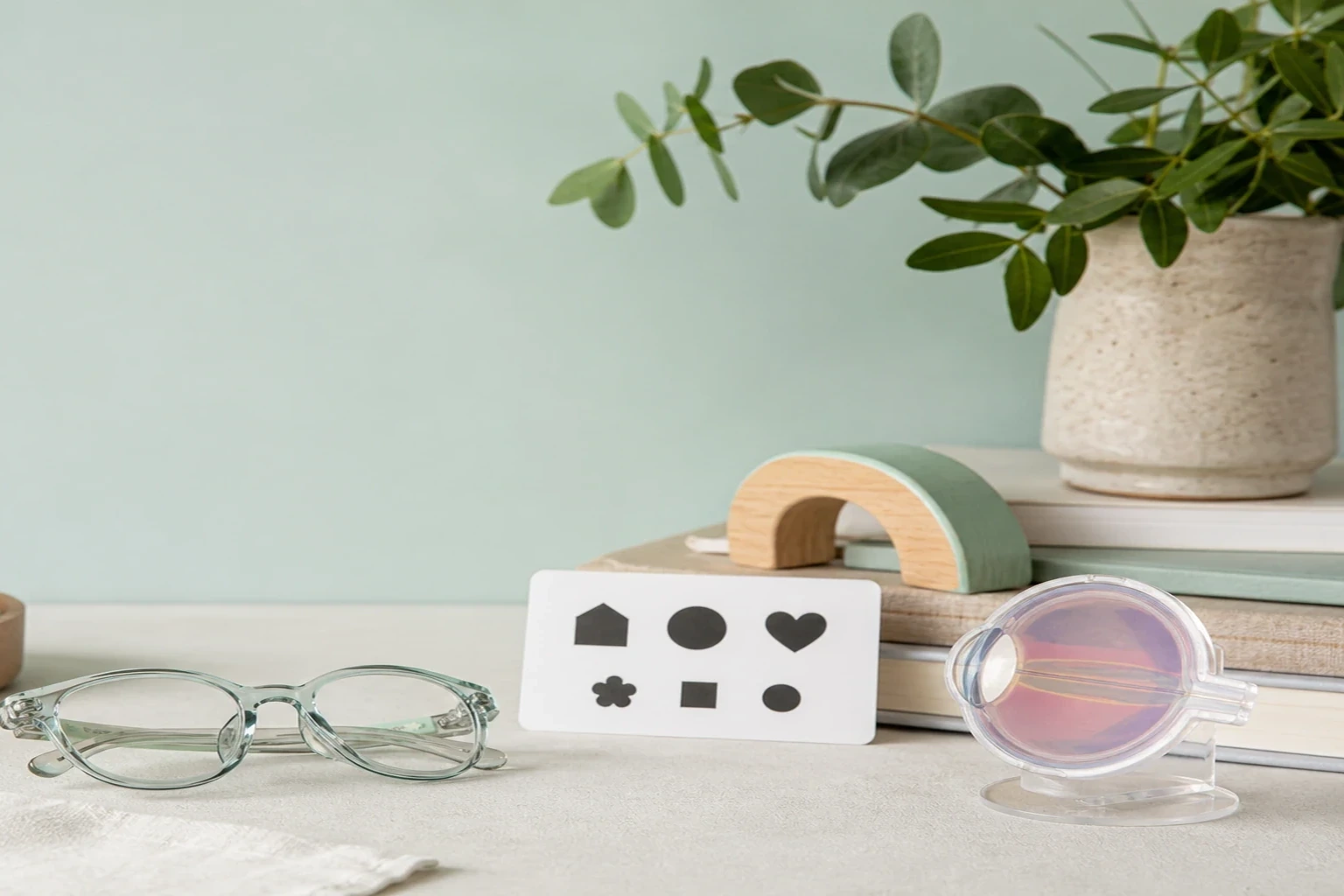
If you have ever watched your child squint at the whiteboard, hold a book uncomfortably close to their face, or come home from school frustrated in a way that has no obvious explanation -- vision is one of the first places a good pediatric optometrist looks. Children rarely complain about blurry vision. They have no baseline for comparison. They assume everyone sees the world the same way they do.
At Classic Vision Care in East Cobb, Dr. Mital Patel, OD specializes in pediatric eye care for families in Marietta, Roswell, Sandy Springs, and throughout the surrounding community. This guide is for parents who want to understand what comprehensive pediatric eye care actually involves, when their child should be seen, and what options exist if myopia is already progressing faster than they would like.
Is a School Vision Screening Enough to Protect Your Child's Eyesight?
The short answer is no. And understanding why is one of the most useful things an East Cobb or Marietta parent can do before deciding whether a full eye exam is worth scheduling.
School vision screenings have real value. They identify a meaningful number of children with significant distance vision problems and send them home with a referral note. But they are designed as a population-level triage tool, not as a diagnostic exam. The standard school screening answers one question: can your child read letters on a chart from 20 feet away?
What Does a School Vision Screening Actually Test?
Most school screenings use a Snellen chart or a photoscreener to measure distance visual acuity. A child reads letters at 20 feet. If they can make out the 20/40 line, they pass. That is the whole test.
A passed screening tells you nothing about:
- •Farsightedness (hyperopia), which causes eyestrain and headaches during close work
- •Astigmatism, which produces blur at all distances
- •Convergence insufficiency, where the eyes struggle to work together at near range -- the most common vision-related cause of reading difficulty that screenings miss entirely
- •Amblyopia (lazy eye), where the brain has already begun suppressing one eye
- •Strabismus (eye misalignment)
- •Color vision deficiency
- •Eye tracking and focusing disorders that directly interfere with reading fluency
A child can score 20/20 on a school screening and still have a condition that substantially limits their ability to read, stay focused, and learn. According to Prevent Blindness, 1 in 4 school-age children has a vision problem affecting their learning. Most of those children go undetected precisely because school screenings do not test for what they have.
Why Do Pediatricians Recommend Comprehensive Eye Exams?
The American Academy of Ophthalmology (AAO) states directly that school vision screenings "are not a substitute for a comprehensive eye exam." The AAO estimates that 80 percent of learning is visual -- which means even a modest, uncorrected vision problem can compound over the course of a school year in ways that are hard to trace back to their source.
The American Optometric Association (AOA) and the American Academy of Pediatrics (AAP) both recommend comprehensive eye exams on a regular schedule starting in infancy, regardless of whether a child has passed a school screening.
For more on what a full children's exam covers, see our pediatric eye exams page.
When Should Children Have Their First Eye Exam?
Most parents assume eye care starts when a child is old enough to read a chart -- around kindergarten or first grade. The AOA's recommended schedule starts much earlier than that.
What Is the Recommended Eye Exam Schedule for Kids?
The infant exam surprises most parents. At six to twelve months, an optometrist is not asking a baby to name letters. The exam uses entirely objective tests: retinoscopy measures the prescription using light reflected off the retina (the child does not need to respond at all), cover tests check eye alignment, and fixation assessments evaluate how well each eye is tracking and working together.
The reason for starting that early is that the visual system is in its most active period of development during the first years of life. If a significant prescription difference exists between the two eyes, or if one eye is turning in or out, the brain will begin to favor the stronger eye and gradually suppress the other. That process creates amblyopia.
Why Does the Treatment Window for Conditions Like Amblyopia Close So Early?
Amblyopia is the most common cause of vision loss in children, according to the National Eye Institute (NIH). It is also among the most treatable conditions in all of eye care -- but only within a limited developmental window.
The brain's visual cortex remains highly adaptable through approximately age 7 to 9. During that window, patching therapy, glasses, or other interventions can successfully train the brain to use the weaker eye and restore more balanced visual function. After age 9, the visual system becomes progressively harder to change. Treatment is still possible but outcomes are less predictable. After the teenage years, amblyopia that went undetected in childhood is generally permanent.
This is why the AOA recommends exams beginning in infancy and continuing annually -- not because most babies need glasses, but because catching a significant problem at age two produces very different outcomes than catching it at age ten.
What Happens During a Pediatric Eye Exam at Classic Vision Care?
Is the Exam Different for Young Children Who Cannot Read an Eye Chart?
Yes, significantly -- and pediatric-focused practices handle this very differently than general optometry offices. Dr. Mital Patel and the Classic Vision Care team use exam techniques tailored to each child's developmental stage.
For infants and toddlers:
- •Retinoscopy: Measures the prescription using light reflected from the retina. The child does not need to respond to any questions or instructions.
- •Lea symbols: Simple shapes (house, circle, apple, square) that preschool-aged children can identify without knowing the alphabet.
- •Cover test: Detects eye turn or suppression by covering and uncovering each eye in sequence.
- •Corneal light reflex: Checks eye alignment by examining where a light source reflects on each cornea.
For school-aged children, the exam expands to include full visual acuity at distance and near, binocular vision testing, color vision, depth perception, and a thorough internal and external eye health evaluation including a view of the retina.
What Conditions Can a Comprehensive Pediatric Exam Detect?
A full pediatric exam can identify myopia (nearsightedness), hyperopia (farsightedness), astigmatism, amblyopia, strabismus, convergence insufficiency, color vision deficiency, elevated intraocular pressure as a glaucoma risk factor, and a range of retinal conditions.
For children with myopia or those at elevated risk, Dr. Patel also performs axial length measurements to track eye growth over time. This data is foundational to myopia control planning -- it tells the doctor whether a child's eye is growing faster than expected and how urgently intervention is warranted.
The East Cobb office is at 3535 Roswell Rd, Suite 8, Marietta. It is just off the Roswell Road corridor, near The Avenue East Cobb and within a short drive of Wellstar Kennestone Hospital. The environment is designed to feel approachable for children, including those who are anxious about anything that sounds like a medical office.
Is Myopia Just Nearsightedness, or Is It a Long-Term Health Concern?
How Common Is Myopia in Children Today?
Myopia -- nearsightedness caused by an eyeball that is slightly too long from front to back -- is one of the fastest-growing pediatric health conditions in the world. A landmark study published in Investigative Ophthalmology and Visual Science by researchers at the Brien Holden Vision Institute projected that myopia would affect approximately 50 percent of the global population by 2050, up from around 23 percent in 2000. In some East Asian populations, myopia prevalence among school-age children already exceeds 80 percent.
In the United States, myopia prevalence in children roughly doubled between 1970 and 2000 and has continued to increase. Increased near work -- screens and sustained reading -- and reduced time spent outdoors are considered significant environmental factors, though genetics also plays a meaningful role.
What Are the Long-Term Eye Health Risks of High Myopia?
Most parents think of myopia as a glasses issue. The prescription updates every year or two, the child sees clearly with correction, and the inconvenience is mostly logistical. What many parents are not told is that myopia represents a structural change to the eye, not just a focusing error.
As the eye elongates to become myopic, the retina, choroid, and sclera are stretched over a larger surface area. That mechanical stress accumulates over time, and it increases the lifetime risk of serious eye disease -- particularly at higher prescription levels.
Eyes with high myopia (generally -5.00 diopters or greater) carry significantly elevated lifetime risks of retinal detachment, glaucoma, earlier-onset cataracts, and myopic macular degeneration -- a form of central vision loss that does not respond to the same treatments used for age-related macular degeneration.
The practical implication for parents is this: myopia control is not cosmetic or about avoiding glasses. Keeping a child's prescription at -2.00 D by age 18 instead of -6.00 D meaningfully reduces their odds of dealing with serious eye disease decades later. The earlier progression is addressed, the more of that trajectory can be redirected.
For parents who want to read more before their child's appointment, our blog covers the underlying science in more detail: understanding myopia causes and symptoms and a parent's guide to myopia progression.
What Myopia Control Options Are Available for Children in East Cobb?
Classic Vision Care East Cobb offers all three of the leading evidence-based myopia control treatments for children. Dr. Mital Patel evaluates each child's prescription, progression history, age, and daily routine before recommending an approach.
What Are Ortho-K Lenses and How Do They Work?
Orthokeratology -- Ortho-K for short -- involves rigid gas-permeable contact lenses worn overnight. While the child sleeps, the lenses gently reshape the front surface of the cornea. In the morning, the lenses come out, and the child has clear vision all day without glasses or contact lenses.
Ortho-K tends to work particularly well for:
- •Children active in sports or water activities (no daytime lens to worry about)
- •Kids who resist wearing glasses during the school day
- •Families where a contact-lens-free daytime routine is a priority
Multiple peer-reviewed studies have shown that Ortho-K slows myopia progression by roughly 30 to 60 percent compared to single vision glasses. The corneal reshaping effect is not permanent -- if lens wear is stopped, the cornea returns to its original shape. But the growth-slowing benefit accumulates during the years the eye is most actively elongating, which is what matters for long-term outcomes.
Our Ortho-K page has more detail on candidacy and what to expect.
What Are MiSight Contact Lenses and Who Are They Right For?
MiSight 1 day lenses (by CooperVision) are soft daily disposable contact lenses designed specifically for myopia control in children. They hold the distinction of being the first contact lens to receive FDA clearance for slowing myopia progression -- cleared for children ages 8 to 12 at the start of treatment.
The lens design uses two optical zones. One zone corrects the child's distance vision. The surrounding zones create a defocus signal in the peripheral retina, which clinical evidence suggests inhibits the eye's elongation response.
In the clinical trials submitted for FDA clearance, MiSight reduced myopia progression by 59 percent over three years compared to children using standard single-vision contact lenses. Daily disposables eliminate the cleaning routine, which simplifies things considerably for both parents and children.
MiSight is particularly well suited for children who are developmentally ready for contact lenses and whose parents value the straightforwardness of a daily replacement schedule. Full information is on our MiSight page.
How Does Low-Dose Atropine Work for Myopia Control?
Low-dose atropine consists of dilute atropine sulfate eye drops -- at concentrations of 0.01 to 0.05 percent -- applied once nightly to each eye. Clinical trials including the ATOM and LAMP studies have shown that atropine at these concentrations slows myopia progression by approximately 50 to 67 percent, depending on the concentration used.
The mechanism is not entirely understood, but researchers believe atropine acts on specific receptors in the retina and sclera that regulate axial eye growth, rather than simply dilating the pupil as higher-dose atropine does. At low doses, side effects are generally minimal. Some children notice slight increased light sensitivity or minor near blur, but the majority tolerate the drops well.
The American Academy of Ophthalmology has acknowledged atropine as a viable off-label myopia control option supported by meaningful clinical evidence. Because it requires no contact lens handling, atropine is often the first-choice option for younger children or those not yet ready for lenses.
More information is available on our atropine page.
Which Myopia Control Option Is Right for My Child?
There is no single right answer, and that is exactly why a consultation matters. Dr. Mital Patel looks at the child's current prescription, how quickly it has progressed over recent exams, the child's age and readiness for contact lens handling, their daily activities, and the family's preferences before making a recommendation.
Some children manage well with one intervention. Others benefit from combination therapy -- atropine drops paired with Ortho-K, for example -- when progression is advancing faster than a single approach can address. The goal across every approach is to keep the prescription as low as possible during the years when the eye is still growing, typically through the mid-to-late teenage years.
Who Is Dr. Mital Patel, OD?
Dr. Mital Patel is the founder of Classic Vision Care East Cobb. She is an optometrist with a focused practice in pediatric eye care and myopia control -- which means children's eye health is built into the core of how this office operates, not offered as an occasional service on the side.
Her approach to pediatric exams includes a myopia risk assessment and a conversation with parents about what to watch for as their child moves through school -- not just an updated glasses prescription and a reminder to return in two years. She works with the same patient families over time, which means she tracks progression history directly rather than starting from scratch at each visit.
For East Cobb and Marietta families, that kind of consistent, named specialist relationship is something most large group practices are not set up to provide.
Serving East Cobb, Marietta, Roswell, and Sandy Springs Families
Classic Vision Care East Cobb is at:
3535 Roswell Rd, Suite 8, Marietta, GA 30062
Phone: (678) 560-8065
The office is along the Roswell Road corridor in East Cobb, near The Avenue East Cobb, Old Canton Road, and Wellstar Kennestone Hospital. Families from Marietta, Roswell, Sandy Springs, and throughout East Cobb use it as their primary eye care destination.
Hours:
- •Monday: 8:00 AM -- 5:00 PM
- •Tuesday: 9:00 AM -- 6:00 PM
- •Wednesday: 8:00 AM -- 5:00 PM
- •Thursday: 9:00 AM -- 6:00 PM
- •Friday through Sunday: Closed
Classic Vision Care also has a location in Kennesaw serving that community. Details are on our Kennesaw pediatric eye care page.
If you came here searching for an eye doctor in Marietta for your child, you are in the right place.
How Do I Book a Pediatric Eye Exam at Classic Vision Care in East Cobb?
Call us at (678) 560-8065 during office hours, or use our online scheduling at classicvisioncare.com/book-now/.
For new patients or myopia control consultations, we recommend booking a few weeks out to ensure enough time for a thorough evaluation. If your child recently failed a school vision screening, please do not wait for a convenient enrollment window -- contact us and we will get them in as soon as possible.
This article is for informational purposes only and does not constitute medical advice. Please consult with an eye care professional for diagnosis and treatment.
Author: Dr. Mital Patel, OD | About Dr. Patel
Related Services at Marietta
Also Available at Our Kennesaw Location
We offer the same services at our Kennesaw office.
View Kennesaw Page →This information is for educational purposes only and does not replace a professional eye examination. Please consult your optometrist for personalized medical advice.
Ready to Get Started?
Book your appointment at our Marietta clinic today.