EAST COBB / MARIETTA
Myopia Control in Marietta and East Cobb, GA
Your child's prescription keeps getting stronger every year. Myopia control is an evidence-based specialty dedicated to slowing that progression. At Classic Vision Care East Cobb, Dr. Mital Patel offers Ortho-K, MiSight, and atropine.
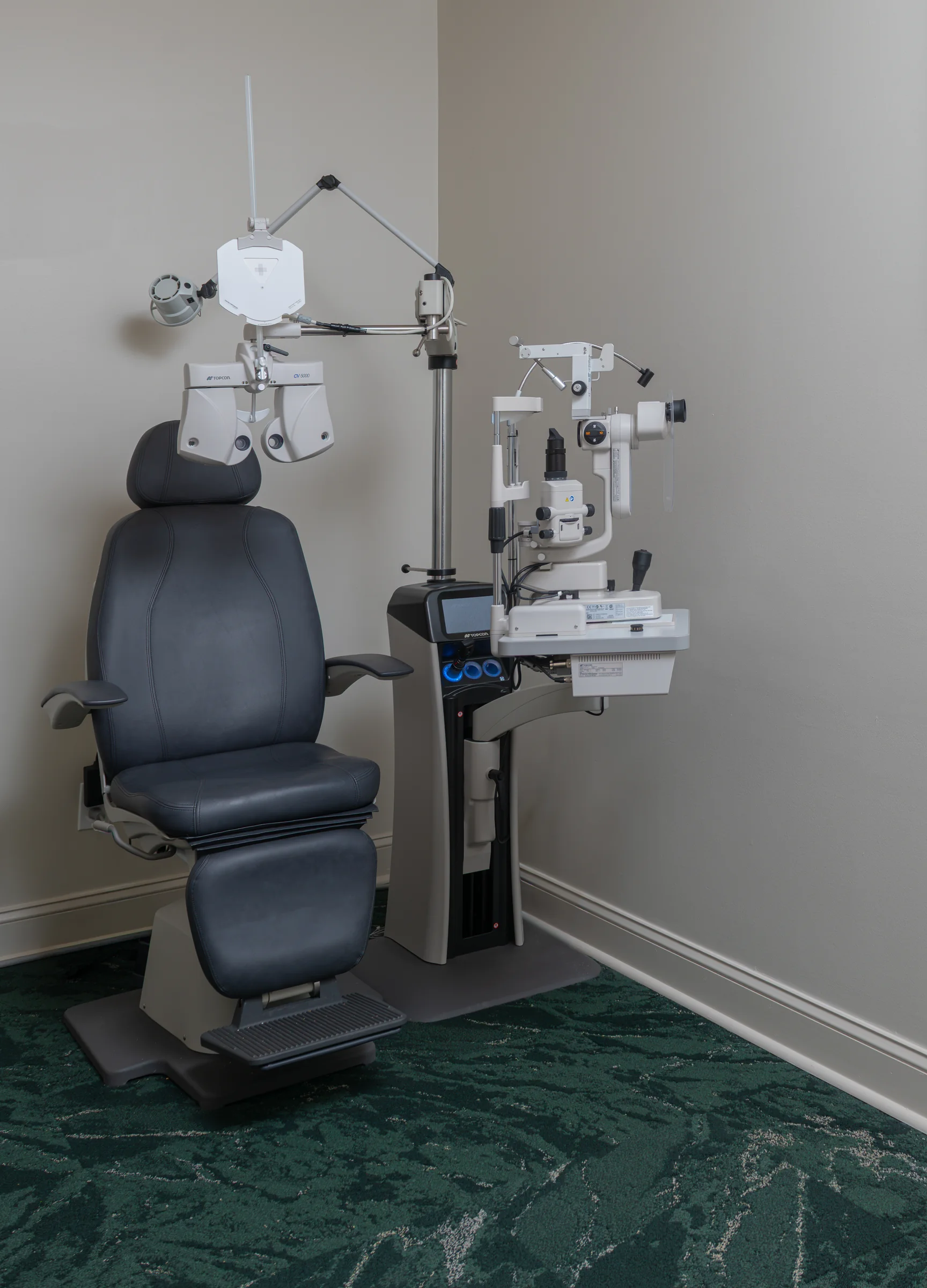
Is Your Child's Prescription Getting Stronger Every Year?
You went in for the annual eye exam expecting a routine checkup and came out with another updated prescription. Again. This is a pattern that many East Cobb and Marietta parents recognize: each year the lenses get a little stronger, each year the optometrist says it is normal for growing children, and each year another appointment is scheduled twelve months out.
What most parents are never told is that there is an active, evidence-based specialty dedicated to slowing that progression. It is called myopia control, and it is not experimental. It is available now, here in East Cobb, and it starts with a conversation with a specialist.
Myopia, or nearsightedness, occurs when the eye grows longer than it should. Instead of focusing light precisely on the retina, the elongated eye focuses it just in front of the retina, producing clear close-up vision but blurry distance vision. The critical word is "longer" because this axial elongation, once it happens, does not reverse. Every year a child's prescription increases represents another increment of permanent change to the physical structure of the eye.
Why Does Myopia Progression Happen?
The two biggest drivers of myopia development and progression are genetics and environment. A child with one myopic parent has roughly three times the baseline risk of developing myopia. A child with two myopic parents has approximately six times the baseline risk. But genetics is not destiny. Environmental factors, particularly how much time a child spends doing sustained near work (reading, tablets, phones) and how little time they spend outdoors, play a significant and modifiable role.
The eye of a growing child is remarkably responsive to its visual environment. Extended time focused on near objects sends signals that appear to promote axial elongation. Time spent outdoors in bright light focused across long distances sends a different signal. Understanding this opens the door to both clinical intervention and meaningful lifestyle choices.
At What Age Does Myopia Usually Develop?
Myopia most commonly appears between ages 6 and 14, with the peak window falling in the early school years. A child who becomes myopic at age 7 or 8 has roughly a decade of active eye growth ahead of them -- a decade during which progression can accumulate substantially. A child who becomes myopic at age 14 typically has only a few more years of progression before the eye stabilizes in the late teens or early twenties.
This is why early detection matters. The American Optometric Association recommends that children receive their first comprehensive eye exam at age one, again at age three, and annually once they start school. If myopia is detected early, the window for effective intervention is wide open.
Schedule a pediatric eye exam at Classic Vision Care East Cobb
Why Is Myopia in Children More Than Just a Glasses Problem?
This is the question most parents have not thought to ask. Glasses work. The child sees clearly. Life goes on. So why is there anything more to discuss?
The answer lies in where myopia ends up, not where it starts. A child who begins with a mild prescription of -1.00 diopter at age 8 and receives no myopia management may reach -5.00 or -6.00 diopters by age 18 -- a level classified as high myopia. That threshold changes the medical picture significantly.
Research published in the journal Ophthalmology projects that approximately 4.758 billion people -- nearly half of the world's projected population -- will be affected by myopia by 2050, with high myopia expected to affect nearly one billion people (Holden et al., 2016). Children in East Cobb and Marietta face the same environmental pressures as children in any high-growth suburb: increasing screen time, reduced outdoor play, and extended near-work demands from school. The trend is local, not just global.
What Happens to the Eye When Myopia Progresses?
Picture the eyeball as roughly the size and shape of a small marble, lined on the inside back wall with the retina. As myopia progresses, the eye does not simply "not see well" -- it physically elongates, like a marble gradually stretching into an oval. This stretching places the retina, its blood vessels, and surrounding tissues under physical tension.
This tension is cumulative and permanent. Unlike a muscle that recovers after exertion, the stretched tissues of a highly myopic eye do not bounce back. Each diopter of increased myopia represents additional axial length and additional strain on fragile ocular structures.
What Are the Long-Term Risks of High Myopia?
High myopia is associated with substantially elevated lifetime risk of several serious, sight-threatening conditions:
- •Retinal detachment: High myopia is one of the leading risk factors for retinal detachment, which requires urgent surgical intervention and can cause permanent vision loss.
- •Glaucoma: People with high myopia have elevated risk of developing glaucoma, a progressive condition affecting the optic nerve.
- •Myopic macular degeneration: The macula, responsible for detailed central vision, can be damaged by the physical stretching associated with high myopia. Unlike age-related macular degeneration, this condition can affect people in their 30s and 40s.
- •Early cataracts: High myopia is associated with earlier development of lens clouding.
Myopia control is therefore a conversation about preventive healthcare, not cosmetic preference. The goal is to keep a child's final prescription as low as possible, reducing their lifetime exposure to these compounding risks.
Learn more about myopia control on our overview page
What Is Myopia Control and How Does It Work?
Myopia control is a specialty area of optometry focused on slowing the progression of myopia in children -- specifically, slowing the axial elongation that drives prescription increases year over year. It is not the same as prescribing corrective lenses, though it may involve lenses. It is an active, targeted clinical approach using treatments designed to intervene in the biological mechanism of eye growth.
Standard glasses and contact lenses do one thing: they correct the blur that myopia causes. They bend light so that it focuses on the retina and the child sees clearly today. They do not address axial elongation. They do not slow progression. A child wearing single-vision glasses every day is still growing their myopia at the same rate they would without them.
Is Myopia Control the Same as Just Wearing Glasses?
No. The distinction is fundamental. Standard single-vision glasses are corrective. Myopia control treatments are therapeutic. The difference is whether the treatment affects only what the child sees today or whether it also influences how the eye grows over the coming months and years.
This is why myopia control requires a specialist consultation rather than a routine prescription appointment. Treatment selection, the monitoring schedule, and adjustment of the approach over time are clinical decisions based on the individual child's profile.
What Makes Myopia Control Treatments Different from Standard Correction?
Three mechanisms are used in recognized myopia control treatments:
1. Peripheral defocus: Certain contact lens and spectacle lens designs intentionally create blur in the peripheral visual field while maintaining clear central vision. Research suggests this peripheral blur sends a "slow growth" signal to the developing eye.
2. Corneal reshaping: Orthokeratology lenses physically reshape the cornea overnight, creating an optical profile that generates peripheral defocus during the day without the child needing to wear anything.
3. Pharmacological inhibition: Low-dose atropine eye drops block muscarinic receptors thought to be involved in signaling axial elongation. The evidence of efficacy is well-established even as researchers continue to study the precise mechanism.
Understanding myopia: causes, symptoms, and what parents should know
What Myopia Control Treatments Does Classic Vision Care Offer in East Cobb?
At Classic Vision Care East Cobb, Dr. Mital Patel offers a full suite of evidence-based myopia management treatments. No single treatment is right for every child, which is why a consultation comes first. Here is what each option involves.
How Do Orthokeratology (Ortho-K) Lenses Work for Kids?
Orthokeratology, commonly called Ortho-K, uses specially designed rigid gas-permeable contact lenses worn overnight while the child sleeps. The lenses gently and temporarily reshape the surface of the cornea. When the child wakes up and removes the lenses, the reshaped cornea provides clear vision throughout the entire day -- no glasses or contacts required.
The reshaping is not permanent. The cornea gradually returns to its original shape if the lenses are not worn, so the child wears them each night as part of their routine. The clinical benefit comes from the corneal profile created by the lenses: it generates peripheral defocus during the day, which slows axial elongation. Multiple published clinical studies support meaningful reductions in myopia progression with Ortho-K compared to standard single-vision correction.
For families in East Cobb whose children play youth soccer, swim competitively, or participate in any sport where glasses are impractical, Ortho-K offers a practical match. The child has completely glasses-free, lens-free vision during every practice and game. There is nothing in the eye to dislodge, nothing to lose on a field, and no concerns about impact.
Full guide to Ortho-K lenses for myopia control
Are MiSight Contact Lenses FDA-Approved for Children?
Yes. MiSight 1 day, manufactured by CooperVision, is the first and only soft contact lens with FDA approval specifically for slowing myopia progression in children between the ages of 8 and 12 at the initiation of treatment. (Children who begin treatment at or before age 12 may continue with MiSight as they grow older.) This is not simply a contact lens that also happens to help with myopia. It was designed, clinically tested, and approved for myopia management as a distinct therapeutic indication.
The approval was granted in 2019 based on a three-year controlled clinical trial demonstrating approximately 59% reduction in myopia progression compared to standard single-vision contact lenses. The FDA summarizes the device indication and clinical basis on its approvals page.
MiSight lenses are daily disposables -- worn during the day and discarded each evening. There is no cleaning routine, no case to maintain, no solutions to manage. For a child who is ready for contact lenses for the first time, this simplicity makes MiSight a genuinely accessible starting point.
MiSight lenses for myopia control: what parents need to know
When Is Low-Dose Atropine the Right Choice?
Atropine is a medication with a long history in optometry and ophthalmology, primarily used at higher concentrations to dilate pupils. At very low concentrations -- 0.01% to 0.05%, far below dilation doses -- atropine appears to slow myopia progression through mechanisms involving muscarinic receptors in the eye.
The ATOM2 study, published in Investigative Ophthalmology and Visual Science, compared atropine concentrations of 0.5%, 0.1%, and 0.01% over five years. The results were clear: the lowest concentration performed best overall. Low-dose atropine at 0.01% produced approximately 60% slowing of progression with minimal side effects, minimal pupil dilation, minimal effect on near focus, and the least rebound effect upon discontinuation.
Low-dose atropine is administered as a single drop in each eye at bedtime. It is often the preferred starting point for children ages 6-8 who are not yet ready for contact lenses, and it can be used alongside Ortho-K or MiSight when combination therapy is appropriate.
Low-dose atropine for myopia control: what parents should know
Can Multifocal Lenses Help Slow Myopia Progression?
Multifocal contact lenses and certain spectacle lens designs create simultaneous clear central vision and deliberate peripheral defocus, using a similar optical principle to MiSight in different formats. Clinical research, including data reviewed by the American Academy of Ophthalmology, established that multifocal approaches can produce a real, if modest, reduction in progression rates.
Multifocal options are particularly relevant for children who prefer spectacles over contact lenses or for older adolescents for whom other treatments may be less fitting. They represent a meaningful step up from standard single-vision correction even where Ortho-K or MiSight are not the right match.
Multifocal lenses for myopia management
How Do You Know Which Myopia Control Option Is Right for Your Child?
This is the central question of every myopia management consultation, and it is one that no article can answer for a specific child. Only a clinical evaluation with access to the child's current refraction, axial length measurement, and progression history can do that. But understanding the key variables helps parents arrive at that conversation with useful context.
Does Your Child's Age Affect Which Treatment Works Best?
Age is one of the most significant factors in treatment selection.
For children ages 6-8, contact lens wear is typically not yet appropriate. Low-dose atropine is commonly the first-line recommendation because it is non-invasive, well-tolerated, and easy to administer nightly. Some children in this range also begin multifocal spectacle lenses as a complementary approach.
For children ages 8-12, MiSight is FDA-approved specifically for this window and is frequently the treatment of choice. Ortho-K is also well-established for children who are mature enough for a rigid lens care routine. Low-dose atropine may be used alone or in combination.
For adolescents 12 and older, the full range of options is available. Ortho-K and MiSight are both strong choices. Adolescents with higher prescriptions or faster progression often benefit from combination approaches.
What If Your Child Is Active in Sports or Swimming?
This is one of the most frequent practical questions from East Cobb parents, given the active youth sports culture across Cobb County. The answer depends on the specific activity.
For contact sports and high-impact activities, glasses are not safe and standard soft contacts carry their own risks. Ortho-K is the standout option: the child wears lenses overnight and has completely glasses-free, lens-free vision at every practice and game. There is nothing in the eye to dislodge and no concerns about physical impact.
For swimming, the calculus is similar. Soft contact lenses should not be worn in pool water due to infection risk from waterborne organisms. Ortho-K again offers the cleanest solution: clear vision in the pool with nothing in the eyes.
MiSight, as a daytime disposable lens, works well for most activities but should be removed before swimming and is not appropriate for contact sports.
What Should You Expect at a Myopia Management Consultation?
A myopia management consultation at Classic Vision Care East Cobb is a thorough clinical appointment. It typically includes a detailed refraction to establish the current prescription, measurement of axial length (the physical length of the eyeball, which is the primary driver of progression), a review of the child's progression history, and a discussion of treatment options tailored to the child's specific profile.
There is no obligation to start treatment at the first appointment. The purpose is to establish a clear, measurable baseline, explain the options honestly, and give the family the information they need to make a good decision.
To schedule: call (678) 560-8065 or book a consultation online.
A parent's guide to myopia progression: what the numbers mean
What Can You Do at Home to Support Your Child's Eye Health?
Clinical myopia management and everyday habits are not an either/or choice. They work together. While no lifestyle change alone replaces the effect of a clinical treatment, the evidence for certain habits is strong enough to include in every myopia conversation.
How Much Outdoor Time Actually Helps?
The connection between outdoor time and reduced myopia risk is one of the most replicated findings in pediatric vision research. A randomized controlled trial published in Ophthalmology (He et al., 2014) assigned school children to an intervention group that received an additional 40 minutes of outdoor time per school day. After three years, the myopia incidence rate in the intervention group was 30.4% compared to 39.5% in the control group -- a 23% relative reduction in new myopia cases.
The proposed mechanism involves light intensity and retinal dopamine. Outdoor light is substantially brighter than indoor lighting even on an overcast day. This bright light stimulates dopamine release in the retina, and dopamine appears to inhibit the axial elongation that drives myopia progression. The effect is specific to outdoor light; indoor bright lighting does not produce the same result.
Current clinical guidance suggests a target of at least 90 minutes of outdoor time per day for children. For families in East Cobb and Marietta, this is practical. East Cobb Park, the Chattahoochee River trails, and neighborhood playgrounds are all nearby. One concrete scheduling shift -- going outside before starting homework rather than after screens -- can meaningfully increase cumulative daily outdoor exposure.
Does Screen Time Cause Myopia to Worsen?
Screen time as a category is not the direct culprit. The underlying issue is sustained near work -- any sustained focus on objects at close range, whether a book, a tablet, or a phone -- combined with insufficient outdoor exposure.
The most meaningful risk factors are distance and duration. Holding a device within 12 inches of the face for extended periods appears to be more significant than holding it at arm's length. Encouraging children to hold reading materials and devices at least 12-16 inches away is a concrete, immediately actionable habit. It costs nothing and reduces visual strain.
The more important variable is whether screen time crowds out outdoor time. A child who spends two hours on a screen but also gets 90 minutes outdoors is in a meaningfully different position than one who spends the same screen time with no outdoor exposure.
What Is the 20-20-20 Rule and Does It Help?
The 20-20-20 rule is a widely recommended visual hygiene guideline: every 20 minutes of near work, look at something at least 20 feet away for at least 20 seconds. This breaks the sustained accommodation cycle and gives the eye's focusing muscles a brief rest.
The 20-20-20 rule does not slow myopia progression the way clinical treatments do, but it is a useful habit that supports overall visual comfort and makes extended study sessions less straining. For school-age children doing homework, a timer set to 20-minute intervals makes it easy to maintain.
Why Do East Cobb Families Choose Classic Vision Care for Myopia Management?
There are optometry practices throughout East Cobb and Marietta, but not all of them offer myopia management as a clinical specialty. Myopia control requires specific training, specific equipment (including axial length measurement), and ongoing familiarity with a rapidly evolving evidence base. It is a specialty within optometry, not a standard service at every general practice.
Who Is Dr. Mital Patel, OD?
Dr. Mital Patel is the founder of Classic Vision Care and the primary provider at the East Cobb location. She is a myopia management specialist with a focused interest in pediatric vision and early intervention. Her approach is to treat myopia management as preventive healthcare -- identifying children at risk of rapid progression and offering evidence-based interventions before the prescription reaches levels associated with long-term risk.
Parents consistently describe Dr. Mital Patel as a clinician who explains options clearly, answers questions without pressure, and follows children closely in active treatment to monitor progression and adjust approaches over time.
Where Is Classic Vision Care East Cobb Located?
Classic Vision Care East Cobb is located at 3535 Roswell Rd, Suite 8, Marietta, GA 30062, on Roswell Road near Wellstar Kennestone Hospital and a short drive from The Avenue East Cobb. The office serves families from East Cobb, Marietta, Roswell, Sandy Springs, and the surrounding area.
Phone: (678) 560-8065
Hours:
- •Monday: 8:00 AM to 5:00 PM
- •Tuesday: 9:00 AM to 6:00 PM
- •Wednesday: 8:00 AM to 5:00 PM
- •Thursday: 9:00 AM to 6:00 PM
- •Friday, Saturday, Sunday: Closed
If you are closer to Kennesaw, our sister location at 1615 Ridenour Blvd, Suite 201, Kennesaw, GA -- led by Dr. Sonya Okungu -- offers the same myopia management services.
Classic Vision Care East Cobb: comprehensive eye care in Marietta
Ready to protect your child's vision? Call Classic Vision Care East Cobb at (678) 560-8065 or schedule a myopia management consultation online. Dr. Mital Patel is ready to help.
This article is for informational purposes only and does not constitute medical advice. Please consult with an eye care professional for diagnosis and treatment.
Related Services at Marietta
Also Available at Our Kennesaw Location
We offer the same services at our Kennesaw office.
View Kennesaw Page →This information is for educational purposes only and does not replace a professional eye examination. Please consult your optometrist for personalized medical advice.
Ready to Get Started?
Book your appointment at our Marietta clinic today.