
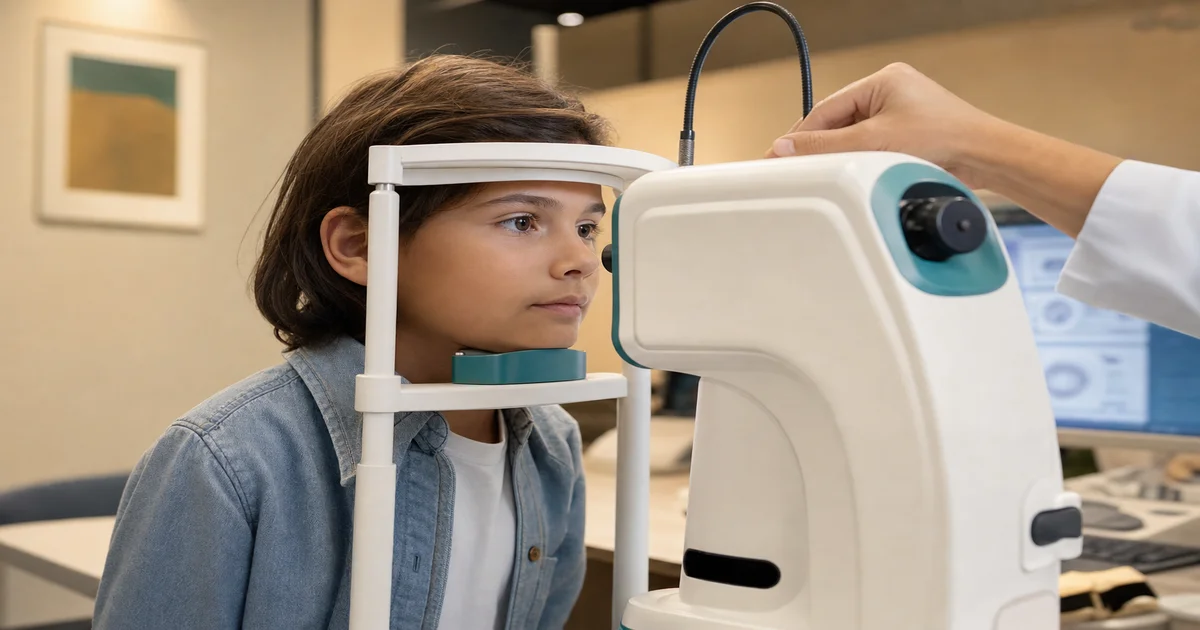
Every year a different family sits across the desk in our Kennesaw exam room and asks the same question. The child's glasses prescription has stepped up again. Last year was -2.00. This year is -3.25. The parent wants to know what happened, whether anything can be done, and why no one mentioned the words "myopia control" before now.
Progressive nearsightedness is not a normal part of growing up. It is a measurable, treatable trajectory with a maturing evidence base, several FDA-approved or evidence-supported tools, and a biomarker (the actual length of the eyeball in millimeters) that parents can track year over year. This guide is the long answer to the question above, written for parents in Kennesaw, East Cobb, Marietta, and the surrounding Cobb County area. The goal is that by the time you finish, you can walk into any myopia consultation knowing exactly what to ask, what each option can and cannot do, what it costs, what good follow-up looks like, and what counts as a real myopia management program versus a marketing label on a stronger pair of glasses.
This is also a long read on purpose. Myopia management is the single most important pediatric eye-care conversation we have with families now, and the field has matured fast enough that almost every parent we see has gotten some of it wrong from the internet or from a well-meaning friend who started their child on the wrong concentration of atropine. The depth here is not academic showmanship. It is the same depth we use across the desk when a family is asking us to help them decide.
Who this is for: parents whose child has been diagnosed with myopia (a minus-power glasses prescription), parents whose child is "borderline" or pre-myopic, parents with strong family history of nearsightedness who want to act early, and parents of children whose prescription has stepped up more than once. If your child has not had a comprehensive eye exam in the last 12 months, the first step is not reading more about treatments. It is booking that exam. Everything in this guide assumes you have a current refraction and a relationship with an eye doctor.
How to use this guide: read sequentially the first time. After that, the table of contents below is built so you can come back to a specific question without re-reading what surrounds it. Each treatment section is self-contained, with effect sizes, FDA status, and fit notes in one place. The FAQ at the bottom catches the long tail of questions parents bring in.
A note before we begin: this article is for informational purposes only and is not medical advice. Every child is different. The specific recommendations for your child belong in a consultation with an eye doctor who can examine them, measure their axial length, look at the cycloplegic refraction, and look at the full clinical picture. If you are local to Cobb County, we cover that step at our myopia control program, but the information below stands on its own regardless of where you ultimately get care.
Table of Contents
- Why is my child's prescription getting worse every year?
- What exactly is myopia in plain terms?
- How common is childhood myopia today?
- Why are ages 6 to 14 the critical window for intervention?
- Is it genetic or environmental?
- What is pre-myopia and why does it matter?
- What is axial length and why does it matter more than the prescription?
- How is axial length measured at a myopia consultation?
- What is cycloplegic refraction and why does it matter for accurate measurement?
- What axial length growth rate counts as "too fast"?
- What does normal versus progressive axial length growth look like by age?
- What does high myopia actually do to the eye over a lifetime?
- Why does every diopter prevented in childhood matter?
- What is the actual risk of retinal detachment in high myopia?
- What is myopic maculopathy and how common is it?
- How does myopia affect glaucoma and cataract risk?
- Is there a lifetime cost of doing nothing?
- Which myopia control treatments actually work? (the evidence)
- How effective are MiSight 1 day soft contact lenses?
- How effective are low-dose atropine eye drops?
- How effective is orthokeratology (ortho-k)?
- How effective are DIMS spectacle lenses (Stellest and MiYOSMART)?
- How effective are soft multifocal contact lenses?
- What about red-light therapy and other emerging options?
- How do the five treatments compare side by side?
- When and how should two treatments be combined?
- When should I consider starting with combination therapy from the beginning?
- How is atropine combined with optical defocus treatments?
- What does "switching" look like if combination therapy still underperforms?
- What role do lifestyle and environment actually play?
- How much outdoor time actually changes the risk?
- Does screen time really matter, or is that a generational worry?
- What about working distance and posture?
- Does sleep, diet, or vitamin D matter?
- What should families actually change at home?
- Which myopia control treatment is right for my child?
- What ages does each treatment fit best?
- How do compliance and lifestyle factor into the choice?
- What does the decision look like for specific child profiles?
- When should I expect to see the first signs of benefit?
- What if the first treatment is not working?
- What does good myopia management actually look like over time?
- What happens at the first myopia consultation?
- How often should follow-ups happen?
- What does Year 1 look like specifically?
- What about Year 2 and Year 3?
- When and how do we know to escalate?
- How do we know the treatment is working?
- How do I know if my child's eye doctor is actually doing myopia management?
- What are the green flags of a real myopia management program?
- What are red flags to watch for?
- What questions should I ask in the first five minutes of the consultation?
- How much does myopia control cost, and what does insurance cover?
- Does vision insurance cover myopia control treatments?
- What are realistic out-of-pocket costs in metro Atlanta?
- How do HSA, FSA, and CareCredit help?
- What does "free trial" or "package deal" framing mean in practice?
- What if my family cannot afford the recommended option?
- How does Classic Vision Care approach pediatric myopia in Kennesaw and East Cobb?
- What does our pediatric myopia program include?
- Who leads pediatric myopia care at CVC?
- How do I book a myopia consultation?
- What are the most common parent questions about myopia control?
- Is myopia genetic or caused by screen time?
- How much outdoor time actually helps?
- Can myopia ever be reversed?
- Can my child play sports with ortho-k or MiSight?
- Is red-light therapy (RLRL) a real option yet?
- Can adults benefit from myopia control?
- What if my child cannot tolerate a contact lens or atropine drops?
- What is pre-myopia and should we treat it?
- Can the optometrist at the big-box optical chain do myopia management?
- What about astigmatism alongside myopia?
- Should I consider a clinical trial?
- How young is "too young" to start treatment?
- What if we live outside Cobb County?
- What should I ask at my child's next eye exam?
- Key takeaways
- Sources
Why is my child's prescription getting worse every year?
Myopia is the optical condition where light entering the eye focuses in front of the retina rather than on it, producing blurred distance vision. The mechanical cause in most children is straightforward: the eyeball has grown too long for its optical power. The cornea and the lens at the front of the eye were designed to focus light onto a retina that sits at a specific distance behind them. When the eyeball stretches, that distance gets longer, and the focused image lands short of where it should. This is why a stronger pair of glasses corrects the vision but does not address the underlying anatomy. The lens compensates; the eye keeps growing.
Childhood myopia is increasingly a global story. The most cited modeling work in the field projects that nearly half of the world's population will be myopic by 2050, with roughly 10% in the high-myopia range that carries the highest disease risk (Holden et al., Ophthalmology 2016). U.S. childhood myopia rates have roughly doubled since the 1970s. The National Eye Institute notes that nearsightedness is the most common refractive error in U.S. children and remains an area of active public-health concern. The numbers feel abstract until you read them next to a class roster. A typical Cobb County fourth-grade class today will have more nearsighted children than the same class did a generation ago, and the average prescription at that age is stronger.
The reason the trajectory matters is that childhood myopia, once it starts, tends to progress year over year through the late teens. The progression is not linear and not the same for every child, but the developmental window between roughly age 6 and age 14 is when most of the eye-elongation damage gets done. By the time the eye stops growing, the adult refractive error and the adult axial length are essentially locked in. This is why intervention in childhood matters in a way that intervention in adulthood cannot replicate.
What exactly is myopia in plain terms?
Imagine the eye as a camera. The cornea and the lens together work like a camera lens. The retina at the back of the eye is the film. If the camera body (the eyeball) is the right length for the lens, light focuses sharply on the film. If the body is too long, the focused image falls just in front of the film and the picture comes out blurry at the edges of distance vision first, then closer in as the eye continues to elongate. The minus number on a glasses prescription (for example -2.50 D) measures how much additional negative power is needed to push the focused image back to the retina. A bigger negative number means a longer eye and a more myopic child.
There is a second piece many parents have not encountered: cylinder, the astigmatism component of the prescription. About a third of myopic children also have a small amount of astigmatism, which is a separate optical irregularity in how the cornea or the lens focuses light. Astigmatism does not directly drive myopia control decisions, but it does affect which lens designs (especially soft multifocal contact lenses) are practical for a given child. A skilled myopia management provider will account for it without making it the focus of the conversation.
How common is childhood myopia today?
The Cobb County signal mirrors the national one. Pediatric exams in our practice routinely show first-time myopia in 7 to 10 year olds, often in children whose parents are themselves myopic. Holden et al. estimate that by 2050, 49.8% of the global population (4.758 billion people) will be myopic and 9.8% will have high myopia (Ophthalmology 2016). The American Academy of Ophthalmology and the National Eye Institute both classify myopia management as a meaningful clinical focus because of the lifetime ocular risks that scale with axial length. Cobb County families increasingly arrive at our office having read about myopia control online and wanting a clear path forward; the most common conversation now is not whether to act, but which protocol fits this child.
Why are ages 6 to 14 the critical window for intervention?
Childhood myopia onset typically happens between ages 6 and 12, with peak progression rates often in the 8 to 12 range. The earlier the onset, the longer the runway for elongation and the higher the likely adult prescription. A child who becomes myopic at age 6 will, on average, end up substantially more myopic as an adult than a child who becomes myopic at age 11, all else equal. This is the math that drives early intervention. Catching the trajectory at -1.00 D and slowing it is materially different from catching it at -4.00 D and slowing it, because the diopters already accumulated are not recoverable. Treatment effect sizes are also generally proportional, so the same percentage slowing applied to a smaller starting baseline yields a smaller adult prescription in absolute terms.
By the late teens, the eye stops growing and refractive error stabilizes for most people. Adult-onset myopia exists but is far less common. Once stabilization happens, the standard myopia control toolkit no longer offers meaningful benefit; the conversation shifts to adult refractive correction.
Is it genetic or environmental?
Both, and the two interact. Children with one nearsighted parent have roughly double the baseline risk of developing myopia compared with children of two non-myopic parents; children with two nearsighted parents have roughly five times the baseline risk. These are population-average estimates across multiple cohort studies and are why we ask about family history at every pediatric exam.
Environmental factors layer on top of the genetic baseline. Two are well-established and reasonably well-quantified: time spent on near work (reading, screens, close-focus activities) and time spent outdoors. More near work and less outdoor time correlate with both onset and progression. Two large studies that we discuss in detail in the Lifestyle section, Sherwin's 2012 meta-analysis (Ophthalmology) and Wu's 2018 cluster randomized trial in Taiwanese schoolchildren (Ophthalmology), showed that increased outdoor time during the school day reduced myopia incidence. The mechanism is not perfectly understood but likely involves brighter natural light, distance fixation, and downstream effects on retinal dopamine signaling.
What is pre-myopia and why does it matter?
Pre-myopia is the clinical category for a child whose refraction is closer to plano (zero) than expected for their age, but who has not yet crossed into a measurable minus prescription. A 7 year old whose cycloplegic refraction is +0.25 D is at substantially higher risk of progressing into myopia than a 7 year old at +1.25 D, even though both have "normal" non-cycloplegic refractions and pass a school screening. The pre-myopia conversation matters because the cheapest, lowest-burden intervention for myopia (more outdoor time, near-work moderation) is most effective when started before the diopter clock starts. The International Myopia Institute formalized pre-myopia as a clinical category in its consensus reports (Wolffsohn et al., 2021), and we use the category in our risk discussion with families who have strong family history.
What is axial length and why does it matter more than the prescription?
If a parent walks away from this article with only one concept, it should be this one. The most clinically meaningful biomarker in childhood myopia is not the diopter number on the prescription. It is the axial length of the eyeball, measured in millimeters with an instrument called an optical biometer.
A young child's eye is roughly 22.0 to 22.5 mm long. Through normal physiological growth, axial length increases modestly each year and plateaus by the late teens. In a child whose myopia is progressing, the eye can elongate at 0.3 to 0.5 mm per year, well above the age-norm. That difference, sustained across the four to ten years of childhood myopia progression, is the difference between a -2.00 D adult and a -8.00 D adult. The prescription can be corrected with glasses or contacts. The physical length of the eye cannot be reversed. This is why every serious pediatric myopia program centers on axial length, not on the year-over-year change in the spectacle prescription.
There is a subtler reason axial length is the better outcome measure. Refractive error has natural visit-to-visit noise. A child's measured refraction can shift by 0.25 to 0.50 D between visits for reasons that have nothing to do with actual eye growth: pupil size differences, accommodation effects (the child's focusing muscles being slightly more or less relaxed), even time of day. Optical biometry, by contrast, gives a measurement accurate to a few microns. Axial length is a lower-noise, higher-signal way to track what is actually happening to the eye.
How is axial length measured at a myopia consultation?
Axial length is measured with optical biometry, typically using a device like the IOL Master or the Lenstar. The measurement takes about 30 seconds per eye, requires no drops, and produces a millimeter reading accurate to within a few microns. The child sits, looks at a fixation target, and the device sends a low-power light through the eye and reads the reflection. There is no pain, no flash, and most children do not even register it as a "test."
We use the baseline reading at the first myopia consult and re-measure at every six-month follow-up. The trend across two or three measurements, not the single value, drives treatment decisions. A practice that does not measure axial length is, in our view, not running a real myopia management program. The diopter change alone is too noisy and too lagging to drive month-to-month treatment adjustments.
What is cycloplegic refraction and why does it matter for accurate measurement?
In a child, the focusing system inside the eye is strong and active. If we measure the prescription without temporarily relaxing that system, we get an answer that is influenced by the child's accommodation. The number is real, but it is not the underlying refractive error; it is what the child sees through their accommodation. Cycloplegic refraction uses a short-acting eye drop (typically cyclopentolate) to temporarily relax the focusing muscle, so the underlying refractive error can be measured cleanly. This is the gold standard for pediatric refraction in any serious eye exam, and certainly any myopia management program.
The cycloplegic refraction matters for myopia control because the trajectory we are trying to slow is the underlying refractive error, not the daily glasses prescription. A non-cycloplegic refraction can over-estimate the minus power in a child with strong accommodation, which can lead to over-prescribing glasses and, in some literature, may have accelerative effects on myopia progression. Every initial myopia workup we do includes cycloplegic refraction.
What axial length growth rate counts as "too fast"?
There is no single universal cutoff, but published clinical guidelines and the International Myopia Institute consensus generally consider sustained axial elongation above roughly 0.2 mm per year in children under 10 as a signal that monotherapy may be insufficient. We interpret the reading in context: the child's age, the family history, the baseline axial length, and the change in cycloplegic refraction over the same window. The point is to catch a fast trajectory early enough to intervene before the child accumulates several more diopters and several more millimeters of growth.
For practical purposes, parents can think of it this way: a child whose axial length is increasing by less than about 0.15 mm per year on treatment is doing well. A child increasing 0.15 to 0.25 mm per year is in the "monitor closely" zone. A child increasing above 0.25 mm per year despite treatment is a candidate for protocol escalation or combination therapy. These are clinical guidelines, not bright-line rules; the doctor reads them in the context of the child's age and baseline.
What does normal versus progressive axial length growth look like by age?
Approximate age-norm axial length growth (population averages, from longitudinal pediatric cohort data summarized in the IMI clinical management reports):
- Age 6 to 8: typical growth ~0.10 to 0.15 mm/year in non-myopic eyes; progressing myopic eyes commonly 0.30 to 0.45 mm/year
- Age 9 to 11: typical growth ~0.05 to 0.10 mm/year in non-myopic eyes; progressing myopic eyes 0.25 to 0.40 mm/year
- Age 12 to 14: typical growth approaching zero in non-myopic eyes; progressing myopic eyes 0.15 to 0.30 mm/year, slowing toward stabilization
- Age 15 and up: typical growth near zero; most stabilization happens between 15 and 18
A child progressing at twice the age-norm sustained over two visits is the clinical picture that drives treatment intensification.
What does high myopia actually do to the eye over a lifetime?
This is the section parents wish someone had given them earlier. High myopia, conventionally defined as refractive error worse than -6.00 D or axial length above roughly 26 mm, carries elevated lifetime risk of four serious eye conditions: retinal detachment, myopic maculopathy, open-angle glaucoma, and earlier-onset cataracts. Flitcroft's comprehensive review (Progress in Retinal and Eye Research 2012) lays out the dose-response between axial length and each of these outcomes. The risk does not turn on at -6.00 D and stay flat below it; it rises continuously, which is why preventing each diopter of progression matters from the first sign of myopia onward.
It is worth saying out loud what this section is trying to do. We are not trying to frighten parents into urgent treatment. We are trying to make the medical, not cosmetic, case for why myopia management is in a different category from "stronger glasses every year." Thick glasses are an inconvenience. Retinal detachment in your thirties is not. The whole field of myopia control exists because the diopter count predicts the adult retina.
Why does every diopter prevented in childhood matter?
Bullimore and Brennan's 2019 analysis in Optometry and Vision Science put concrete numbers on the lifetime-risk math. They estimated that each diopter of myopia avoided in childhood reduces the lifetime risk of myopic maculopathy by approximately 40%. The same paper makes a related point that matters for treatment urgency: there is no clinically safe stopping point. A child kept at -3.00 D instead of progressing to -6.00 D carries materially lower lifetime disease risk than a child whose progression was simply allowed to continue with stronger glasses each year. The argument applies even at moderate myopia ranges; it is not a high-myopia-only consideration.
A useful mental model: think of every diopter as a deposit in a lifetime risk account. The deposits compound. Slowing progression early is the highest-yield intervention because each year of slowing reduces the eventual account balance.
What is the actual risk of retinal detachment in high myopia?
Retinal detachment, the separation of the retina from the back wall of the eye, is the most acute disease tied to high myopia. Risk rises substantially with axial length. The longer the eye, the thinner and more stretched the peripheral retina becomes, and the more vulnerable it is to tears that lead to detachment. Detachments above approximately 26 mm of axial length carry markedly higher incidence than those at average axial length.
Most retinal detachments in adulthood present with sudden flashes of light, a shower of new floaters, or a "curtain" of vision loss. They are surgical emergencies. Even with prompt repair, vision recovery is not guaranteed. This is the outcome we are trying to make rarer at the population level by reducing how many children end up with axial lengths above the threshold.
What is myopic maculopathy and how common is it?
Myopic maculopathy is the degenerative thinning and atrophy of the central retina (the macula) that occurs in highly myopic eyes. It is the leading cause of irreversible vision loss in highly myopic adults globally. Unlike retinal detachment, it is not a single event; it is a slow degeneration of central vision that can take decades to manifest and is not currently reversible. The pathology is a direct consequence of the eyeball stretching and the retinal layers thinning over time.
Bullimore and Brennan's per-diopter risk estimate (around 40% lifetime risk reduction per diopter prevented) is specifically a maculopathy risk estimate. It is among the strongest arguments for treating moderate myopia, not just high myopia. The disease curve does not have a sudden cliff; it climbs through the moderate range and accelerates above -6.00 D.
How does myopia affect glaucoma and cataract risk?
Open-angle glaucoma, a progressive optic nerve disease driven in part by intraocular pressure, is more common in myopic eyes. The structural geometry of the optic nerve in a myopic eye interacts differently with pressure than in a non-myopic eye, which both increases susceptibility and makes the disease harder to detect. Highly myopic eyes can show optic nerve appearances that look glaucomatous even when they are not, which complicates monitoring.
Cataracts (clouding of the lens inside the eye) also develop earlier on average in highly myopic adults. The lifetime risk of cataract surgery is higher and the typical age at first cataract is earlier. Cataract surgery is well-developed and outcomes are generally good, but cataract surgery in a highly myopic eye carries higher rates of subsequent retinal detachment because of the same axial-length anatomy that drives detachment risk in the first place.
Flitcroft's review (2012) covers each of these risk relationships in detail; the unifying observation is that the same anatomical stretching that produces the minus prescription also produces the cascade of disease risks. Treating the elongation is the lever that moves all four.
Is there a lifetime cost of doing nothing?
There is, both in vision and in dollars. Untreated high myopia in adulthood typically means thicker lenses, more frequent ocular health monitoring, higher cumulative cost of eye care across a lifetime, and elevated risk of any of the four conditions above. The dollar cost of long-term myopia management on a child is substantially lower than the dollar and quality-of-life cost of treating an adult high-myopia outcome. This is not a marketing pitch; it is the cost-benefit framing that public-health analyses of myopia have increasingly converged on.
Which myopia control treatments actually work? (the evidence)
There are five categories of evidence-supported myopia control treatments. We cover each below with the actual numbers from the landmark studies, the U.S. FDA status, age and lifestyle fit, side effects, daily compliance, and what each demands of the family in practice. The order is roughly by depth of randomized-trial evidence in U.S. children, not by our preference; preference depends on the specific child.
How effective are MiSight 1 day soft contact lenses?
MiSight 1 day, made by CooperVision, is a single-use soft contact lens with concentric peripheral defocus zones. The central zone gives clear distance vision; the surrounding zones impose a controlled myopic defocus on the peripheral retina, which appears to slow the elongation signal the eye uses to drive growth. MiSight is the only product in the United States that holds FDA approval specifically for slowing myopia progression in children aged 8 to 12 at the start of treatment (FDA Premarket Approval P180035, 2019; see also the American Academy of Ophthalmology overview).
The pivotal 3-year randomized controlled trial (Chamberlain et al., Optom Vis Sci 2019) reported that MiSight wearers had myopia progression slowed by approximately 59% and axial elongation slowed by approximately 52% compared with single-vision soft contact lens controls. A 6-year follow-up continued to show separation between treatment and control groups (Chamberlain et al., Ophthalmic Physiol Opt 2022), which addresses a common parent question: does the benefit hold up beyond the trial window? In the published follow-up, yes.
The daily-wear protocol is straightforward: insert one lens per eye in the morning, wear for at least 10 hours per day across the day, remove and discard in the evening. The lens is single-use, which lowers the infection risk associated with monthly or two-week contact lenses. Most pediatric MiSight wearers learn insertion and removal within one to two follow-up visits. There is a short adaptation period of one to two weeks where the child may notice slight peripheral haziness around bright lights at night; this typically resolves with continued wear.
Best fit: a motivated child age 8 to 12 at initiation who can manage clean insertion and removal. Many parents are surprised at how readily an eight or nine year old learns the process when the motivation is there. Off-label use outside the FDA-labeled age window is common in clinical practice for older or younger children with the same lens design.
Side-effect profile in practice: mostly minor. Occasional dry-eye symptoms in low-humidity environments. Rarely, allergic conjunctivitis or contact-lens-related discomfort, which is typically a hygiene issue and resolves with reinforcement of lens care basics. Microbial keratitis (corneal infection) is a known risk of all contact lens wear; daily disposables have lower risk than reusable lenses and the absolute risk remains low when the child follows the hand-hygiene protocol.
For a deeper look at how we fit and follow MiSight, see our MiSight lenses for myopia control page.
How effective are low-dose atropine eye drops?
Atropine is a muscarinic antagonist that has been used in eye care for more than a century at high concentrations. The myopia control application uses much lower concentrations: 0.01%, 0.025%, 0.05%, and historically 0.5%. The exact mechanism by which atropine slows myopia is still debated; current evidence points to a choroidal and scleral effect rather than the older accommodation hypothesis.
The clearest dose-response data comes from the LAMP study (Yam et al., Ophthalmology 2019) in Hong Kong, which compared atropine 0.01%, 0.025%, and 0.05% against placebo in 438 children aged 4 to 12. At one year, atropine 0.05% reduced myopia progression by approximately 67% compared with placebo. The two-year LAMP follow-up confirmed 0.05% as the most effective concentration with an acceptable side-effect profile (Yam et al., Ophthalmology 2020). Earlier work in the ATOM2 trial (Chia et al., Ophthalmology 2012) had shown efficacy across 0.01% to 0.5%, with greater rebound at higher concentrations after cessation.
Parents researching atropine in U.S. forums often encounter conflicting messaging because the largest U.S. randomized trial, CHAMP (Repka et al., JAMA Ophthalmology 2023), found that atropine 0.01% did not show statistically significant slowing of myopia progression compared with placebo over three years in a U.S. pediatric cohort. Atropine 0.02% showed a modest effect on spherical equivalent but not on axial length. The clinical takeaway from LAMP plus CHAMP combined is consistent: concentration matters, and the U.S. data does not support 0.01% as a stand-alone strategy. The 0.05% concentration is what current practice typically targets when atropine is chosen.
Atropine for myopia is technically off-label in the United States. It is dispensed through compounding pharmacies under a prescription, applied as one drop per eye each evening. We work with specialty compounding pharmacies that maintain quality controls on concentration accuracy and preservative use, because the difference between 0.025% and 0.05% matters and not every pharmacy is set up to handle it well.
Side-effect profile and what parents should know: at 0.05%, the most common side effects are mild photophobia (light sensitivity, more noticeable outdoors on sunny days) and slight reduction in reading focus (the focusing system is partially relaxed, which can make small print harder for some children). Both typically fade within the first two to four weeks. Polarized sunglasses solve the photophobia for most children. The reading effect is rarely clinically significant at 0.05%; at higher historical concentrations (0.5% and above) it was problematic, which is part of why current practice has converged on the 0.025% to 0.05% range. Rare effects include allergic conjunctivitis from the drop itself or preservatives.
The rebound phenomenon is the other thing parents should understand. When atropine is stopped, the rate of axial elongation can temporarily increase, sometimes substantially. This effect is larger at higher concentrations. In practice, this means atropine treatment is not started lightly and is rarely abruptly stopped; the protocol is usually a gradual taper at the natural endpoint of myopia stabilization in the late teens, not a sudden cessation.
We discuss the full risk-benefit profile in our atropine eye drops for myopia control page. The summary view: atropine 0.05% at evening dosing is a strong evidence-based option for children who cannot or will not wear contact lenses, who have early-onset progression and need pharmacologic intervention, or who are candidates for combination therapy.
How effective is orthokeratology (ortho-k)?
Orthokeratology, often shortened to ortho-k, uses custom rigid gas-permeable contact lenses that are worn overnight. While the child sleeps, the lens gently flattens the central cornea, leaving the child with clear daytime vision the next day without glasses or daytime contacts. Critically for myopia control, the same peripheral corneal reshaping also creates the myopic-defocus signal that slows axial elongation.
Orthokeratology lenses are FDA-cleared for refractive correction. Their specific use for slowing myopia progression is off-label, in the same way much of clinical medicine uses approved tools for indications not on the original label. Multiple randomized and longitudinal studies, summarized in published meta-analyses (Sun et al., 2015; Si et al., 2015) and the International Myopia Institute consensus reports, report ortho-k slowing axial elongation by roughly 30% to 50% over two to three years in children aged 8 and older. The effect size is somewhat lower than MiSight or DIMS in head-to-head trial comparisons, but the lifestyle benefits (no daytime correction) make it the right answer for the right child.
The fitting process takes a few visits. The lens design has to be customized to the child's cornea using corneal topography. The first night of wear is the most uncomfortable for most children; by the third or fourth night, most are sleeping through with the lens in place. Daytime vision quality improves rapidly over the first week and reaches steady state within two to four weeks. We re-measure at one week, one month, and three months after dispensing to confirm the fit is right and the corneal response is appropriate.
Side-effect profile and microbial keratitis risk: ortho-k carries a known but small risk of microbial keratitis (corneal infection), which is the same risk as overnight contact lens wear in general. The rate in well-managed pediatric ortho-k programs is on the order of 1 to 4 cases per 10,000 patient-years in published series. The risk is minimized by strict adherence to lens care protocol: clean hands, fresh solution, never tap water, never reuse old solution, replace the lens case regularly. Families that cannot or will not adhere to that protocol are not good ortho-k candidates and we say so directly.
Other side effects include occasional corneal staining (small surface irritation) that typically resolves with a brief lens-wear holiday, and rare lens-induced corneal warpage that resolves on cessation. We do not see meaningful long-term corneal health concerns in children who have completed years of ortho-k wear with appropriate follow-up.
Best fit: an athletic child age 8 and up, especially swimmers and contact-sport athletes who do not want daytime correction; a child whose family is committed to nightly lens care; and a child whose initial prescription is in the range that ortho-k can correct (generally up to about -6.00 to -7.00 D and limited astigmatism, depending on lens design). Our ortho-k for myopia control page describes the fitting process in detail.
How effective are DIMS spectacle lenses (Stellest and MiYOSMART)?
Two commercial spectacle-lens technologies, Hoya's MiYOSMART (using the DIMS, or Defocus Incorporated Multiple Segments, design) and Essilor's Stellest (using HAL, or Highly Aspherical Lenslets), are widely prescribed for childhood myopia control in Europe, Asia, and Canada. Both are spectacle lenses with hundreds of tiny lenslets distributed across the lens surface. The central area gives clear distance vision; the lenslets impose a controlled myopic defocus on the peripheral retina, the same optical principle MiSight uses in a contact lens but delivered through glasses.
The pivotal RCT (Lam et al., Br J Ophthalmol 2020) reported DIMS spectacle lenses slowing myopia progression by approximately 52% and axial elongation by approximately 62% over two years versus single-vision spectacles. A separate trial of Stellest's HAL design (Bao et al., Br J Ophthalmol 2022) reported similar effect sizes that were sustained over two years. These are among the strongest effect sizes in the myopia control literature for any modality, and they come with the lowest daily-compliance burden of any of the five categories: the child simply wears their glasses.
Neither MiYOSMART nor Stellest is currently FDA-approved in the United States. Some U.S. clinics dispense the lenses through international supply channels; others wait for U.S. regulatory clearance and dispense alternative options in the meantime. Our position is that we do not dispense unapproved devices outside an FDA-cleared pathway. We discuss DIMS spectacle lenses with families because the evidence is real and because parents will encounter the option in their research; we are transparent about what is and is not available in the U.S. market.
When U.S. approval comes (timing uncertain at the time of writing), DIMS spectacle lenses are likely to become a high-volume first-line option for younger children, children who do not want contact lenses, and children whose families want the lowest-friction protocol. The advantage is clear: any glasses-wearing child can adopt the lens, with no contact lens learning curve and no nightly drop routine.
The adaptation period is short. Most children adjust to the peripheral lenslet pattern within a few days. There is no significant cost increase in daily wear (the lens is just glasses) once dispensed.
How effective are soft multifocal contact lenses?
Soft multifocal contact lenses, similar in principle to MiSight but using a different center-distance multifocal design and a high reading add (commonly +2.50 D), are commercially available from several manufacturers including Biofinity Energys multifocal, NaturalVue, and others. The BLINK trial (Walline et al., JAMA 2020) randomized 287 children aged 7 to 11 to single-vision contacts, +1.50 D multifocals, or +2.50 D multifocals. Over three years the +2.50 D high-add group had myopia progression slowed by approximately 43% and axial elongation slowed by approximately 36%. The +1.50 D add showed smaller effects.
Soft multifocal contact lenses are off-label for myopia control in the U.S. and are usually monthly-replacement rather than daily disposable, though daily disposable options are increasingly available. They are a reasonable fit when MiSight is unavailable, when the child is older than the FDA-labeled MiSight age window at initiation, when family preference favors a monthly lens over daily disposable for cost reasons, or when MiSight's specific dual-focus design does not fit the child's corneal anatomy.
Side-effect profile is similar to MiSight: occasional dry eye, rare allergic conjunctivitis, low absolute risk of microbial keratitis at appropriate replacement intervals.
Our multifocal contact lenses for myopia control page covers the fitting protocol we use.
What about red-light therapy and other emerging options?
Repeated low-level red light (RLRL) is an active research area with promising published efficacy data, primarily from China. RLRL devices use brief daily exposure to a specific wavelength of red light through an in-home device. Reported effect sizes in trials are large, in some studies rivaling or exceeding atropine and DIMS. The mechanism is hypothesized to involve increased choroidal thickness and altered retinal signaling.
As of this writing, RLRL devices are not FDA-cleared in the United States for myopia control. Long-term safety data, particularly retinal phototoxicity studies in pediatric eyes, is still accruing. We follow the research closely and do not currently dispense or recommend RLRL devices outside of clinical trial settings. When and if U.S. regulatory clearance arrives with adequate long-term safety data, RLRL may join the standard toolkit.
Other emerging approaches include various combinations of pharmacologic and optical interventions, pirenzepine (a different muscarinic antagonist studied historically), and a continuing series of refinements to peripheral defocus contact lens and spectacle lens designs. The field is moving. The five categories above represent the current standard-of-evidence options; the standard-of-evidence list will likely expand over the next five years.
How do the five treatments compare side by side?
| Treatment | Progression slowing | Axial length slowing | U.S. FDA status | Daily burden | Typical fit |
|---|---|---|---|---|---|
| MiSight 1 day | ~59% | ~52% | Approved (ages 8-12 at start) | Daily lens insert/remove | Motivated 8-12 year old, good hand hygiene |
| Atropine 0.05% | ~67% (LAMP) | proportional axial slowing | Off-label / compounded | Nightly eye drop | Cannot tolerate contacts; pharmacologic preference |
| Atropine 0.01% (U.S. CHAMP) | Not significant | Not significant | Off-label / compounded | Nightly eye drop | Older studies favored; current evidence prefers higher concentration |
| Orthokeratology | ~30-50% (meta-analyses) | ~30-50% | Cleared for refraction; off-label for myopia control | Nightly lens, daytime lens-free | Athletes, swimmers; family committed to lens hygiene |
| DIMS spectacle (Stellest / MiYOSMART) | ~52% | ~62% | Not yet FDA-approved in U.S. | Just wear the glasses | Spectacle-only kids; lowest compliance burden |
| Soft multifocal contact lens (+2.50) | ~43% | ~36% | Off-label | Daily or monthly lens wear | MiSight unavailable; older child at initiation |
| Red-light therapy (RLRL) | Promising in Chinese trials | Promising | Not FDA-cleared in U.S.; long-term safety still accruing | Brief daily home device | Research only at this time |
Cross-study comparisons are imperfect because the trial populations and follow-up durations differ. The numbers above should be read as effect-size estimates from each study's specific design, not as a head-to-head ranking. The right treatment for a given child depends on fit, not on which row has the biggest percentage.
When and how should two treatments be combined?
Combination therapy is increasingly common when monotherapy underperforms. The clinical logic is straightforward: the two main mechanisms of action (pharmacologic, via atropine, and optical defocus, via MiSight, ortho-k, or DIMS) are independent. Stacking them often produces additive effects on axial elongation, particularly in children whose progression continues despite a single approach.
The most studied combinations are atropine plus MiSight, atropine plus ortho-k, and atropine plus DIMS spectacle. Several recent studies (Kinoshita et al.; Erdinest et al.; Tan et al.) show additive effects on axial elongation when a pharmacologic agent is paired with an optical defocus device. The International Myopia Institute clinical management consensus reports describe combination therapy as a reasonable next step when monotherapy fails to keep axial elongation under control.
When should I consider starting with combination therapy from the beginning?
Most families start with monotherapy and add a second modality if needed. There is a small subset of children where the case for combination therapy at the outset is stronger: very early onset (myopia diagnosed before age 7), two highly myopic parents, rapid initial progression observed before treatment started (axial elongation already documented above 0.4 mm/year), or strong family history of high myopia in grandparents or aunts/uncles. For these children, the clinical conversation is often "should we use both engines from the start" rather than "should we start with one and see."
How is atropine combined with optical defocus treatments?
The protocol pairs an evening dose of atropine 0.05% with daytime wear of MiSight or DIMS, or with nightly ortho-k. The atropine and the optical modality work through different pathways and the schedules do not conflict. Side effects are not additive in any meaningful way; the side-effect profile of the combination is essentially the union of the two monotherapies.
What does "switching" look like if combination therapy still underperforms?
Rarely, axial length continues to grow above the threshold despite combination therapy. The next step is a re-confirmation of compliance (the most common reason for underperformance is missed lens wear or missed drop doses), followed by consideration of a higher atropine concentration (0.05% is current standard; 0.1% is used in some practices for resistant cases with informed consent about higher side-effect risk), or a switch in the optical modality. Stopping all treatment is not the answer; rebound progression on atropine cessation is well documented and would worsen the trajectory.
What role do lifestyle and environment actually play?
Lifestyle factors do not replace clinical treatment for a child who is already myopic and progressing. They are real, evidence-supported, and low-cost additions, and they are the primary intervention for children at high risk who are not yet myopic. They also matter for siblings of myopic children, who carry elevated genetic risk and who can benefit from prevention before the diopter clock starts.
How much outdoor time actually changes the risk?
The strongest evidence for outdoor time comes from Sherwin's 2012 meta-analysis (Ophthalmology), which pooled data from multiple cohort studies and found that each additional hour per week of outdoor time was associated with approximately 2% lower odds of myopia. Wu's 2018 cluster randomized trial in Taiwanese schoolchildren (Ophthalmology) implemented a structured school-day outdoor time program and demonstrated lower myopia incidence in the intervention schools versus control schools over the trial period.
The practical target most pediatric optometry guidelines now use is approximately two hours per day of outdoor time for school-age children, ideally distributed across the week rather than concentrated on weekends. The benefit appears to be from bright natural light (well above any reasonable indoor light intensity) plus the dominant distance-fixation pattern of outdoor activity. The effect appears to be primarily preventive of onset, with a smaller effect on progression in children who are already myopic.
Does screen time really matter, or is that a generational worry?
Screen time is one component of a broader pattern called near work, which includes any sustained close-focus task. The strongest research signal is on total near-work time and the duration of continuous near-focus sessions, not specifically on screens versus books versus paper homework. A child doing four hours of close reading per day is in roughly the same risk category as a child doing four hours of tablet time per day, holding other factors equal.
What does seem to matter is the duration of continuous near-focus before a break. The 20-20-20 rule (every 20 minutes, look at something 20 feet away for 20 seconds) is a reasonable, low-cost behavioral pattern that breaks up sustained near focus. It is not a clinical treatment, but in combination with outdoor time it is the cheapest evidence-supported habit change a family can make.
What about working distance and posture?
Working distance, the distance between the eyes and the near task, may also matter. Children who habitually hold reading material very close (less than about 30 cm) show higher progression rates in some cohort studies. The mechanism is thought to involve sustained peripheral hyperopic defocus, which is the opposite of the defocus signal that MiSight and DIMS spectacle lenses try to create. Encouraging a slightly farther reading distance is benign behavioral advice; we mention it at every pediatric exam.
Does sleep, diet, or vitamin D matter?
The published evidence on sleep, diet, and vitamin D for myopia is weaker than the evidence on outdoor time and near work. Vitamin D has been studied as a candidate mediator of the outdoor-time effect, but trials of vitamin D supplementation alone have not consistently shown myopia reduction. Sleep deprivation in children correlates with many health outcomes including some refractive findings, but it is not a primary myopia control lever. Diet recommendations specific to myopia (omega-3s, leafy greens, and similar) are largely extrapolations from general eye-health evidence rather than myopia-specific evidence. We mention these factors at the consult but do not build the treatment plan around them.
What should families actually change at home?
A reasonable home pattern, in addition to clinical treatment, looks like this: two hours of outdoor time per day on average, structured breaks during sustained near work using a 20-20-20 or similar pattern, reading at arm's length rather than nose-to-page, and an honest accounting of total daily near-work hours (homework plus pleasure reading plus screens) so the family can identify whether the load is unusually high. None of this replaces clinical treatment for a progressing child. All of it stacks on top.
Which myopia control treatment is right for my child?
The honest answer is that the right choice depends on your child's age, your child's compliance maturity, their lifestyle, your family's budget, the family's preference between optical and pharmacologic approaches, and the available evidence for the particular combination. There is no "best" treatment in the abstract. The decision is collaborative between the family and the doctor, after the workup is complete.
What ages does each treatment fit best?
MiSight carries an FDA-labeled indication for ages 8 to 12 at initiation. Off-label use outside that window is common in clinical practice for older or younger children, with the same lens design. Atropine has been studied across ages 4 to 14, with earlier initiation generally favored because earlier-onset myopia tends to progress faster. Ortho-k is typically fitted from age 8 and up, but the limiting factor is the family's ability to manage nightly lens hygiene. DIMS spectacle lenses fit any glasses-wearing age, including children younger than the MiSight label. Soft multifocal contacts were studied in children aged 7 to 11 in BLINK; clinical use extends to older teens when appropriate.
How do compliance and lifestyle factor into the choice?
An athletic 10 year old who plays soccer four days a week is a strong candidate for ortho-k, because they wake up to clear vision and play without daytime correction. A 9 year old who is squeamish about touching their eye is a poor MiSight candidate and a strong DIMS spectacle candidate (when available) or an atropine candidate. A 7 year old whose parents both have high myopia and whose own myopia is progressing rapidly may be best served by atropine 0.05% as monotherapy, then by adding MiSight or ortho-k at age 8 or 9 if axial length keeps climbing.
What does the decision look like for specific child profiles?
A few realistic profiles, anonymized and composite from years of clinic experience:
Profile A: 7-year-old new myope, family history strong. First-time prescription of -1.25 D OD and -1.00 D OS, axial length already at the 95th percentile for age, both parents myopic at around -5.00 D, sibling already in MiSight. This child is in the early-onset, high-risk category. The conversation usually lands on atropine 0.05% as monotherapy now (because the child is below the FDA-labeled MiSight age), with a plan to add MiSight at age 8 if the trajectory does not flatten. Outdoor time is a serious part of the plan rather than a footnote.
Profile B: 9-year-old, lens-curious, swims competitively. First-time prescription of -2.00 D, axial length above age-norm, swims four days per week year-round. This child is a strong ortho-k candidate. Daytime swimming is much easier without contacts, the family is engaged enough to handle the nightly lens routine, and the effect-size data on ortho-k is adequate at this age.
Profile C: 10-year-old athlete, contact-lens averse, parents prefer optical. Prescription -2.50 D, soccer four days per week, family does not want pharmacologic intervention as a first step. If DIMS spectacle lenses were FDA-approved in the U.S., this would be a textbook DIMS candidate. In the current market, MiSight is the closest analog if the child can tolerate insertion and removal, with adequate lens-care training. Otherwise, soft multifocal contacts as an alternative defocus modality.
Profile D: 12-year-old at -4.50 D and still progressing. Already moderately myopic, axial length above 25 mm, progression continued on glasses-only across the last two years. This child is a candidate for combination therapy at the outset: atropine 0.05% plus an optical defocus modality (MiSight or ortho-k depending on lifestyle). The risk-of-high-myopia argument is high enough that monotherapy is unlikely to be sufficient, and the published combination-therapy data supports the additive approach.
Profile E: 14-year-old, late initiation. Prescription -3.25 D, just diagnosed this year, no family history. Progression rate uncertain because there is no prior reference. Reasonable approach is to measure axial length, choose a single modality based on lifestyle fit, and re-evaluate at 6 months. Late initiation has a shorter remaining window before stabilization but is still worth treating, because every diopter prevented in the next three years is a diopter not in the adult lifetime account.
When should I expect to see the first signs of benefit?
Most families want to know how soon they will see that treatment is working. The honest answer is that the visit-to-visit refraction change is too noisy to be a useful signal in the first six months. The signal we actually look at is the axial length trend across two or three measurements over twelve months. At six months we know directionally; at twelve months we have a real trend; at twenty-four months we know whether the protocol is the right one for this child. Patience matters; pulling treatment at three months because "it doesn't seem to be working" is a common, expensive mistake.
What if the first treatment is not working?
The first step is to confirm compliance. Drop adherence, lens wear time, and lens hygiene are the most common reversible reasons a treatment underperforms. Once compliance is confirmed, the conversation turns to switching, adding a second modality, or both. We define "not working" operationally as sustained axial elongation greater than approximately 0.2 mm per year in a child under 10, persisting over six to twelve months despite the protocol. Stopping treatment entirely is rarely the answer, particularly for atropine, where rebound progression on cessation is well documented.
What does good myopia management actually look like over time?
A serious pediatric myopia program is a multi-year relationship, not a single visit. Below is the year-by-year structure we use, which mirrors the published clinical guidelines from the AOA, AAO, and IMI.
What happens at the first myopia consultation?
The first visit includes a comprehensive pediatric eye examination, a cycloplegic refraction (using dilating drops to relax the focusing system so the underlying refraction can be measured accurately), an axial length baseline measurement, a binocular vision assessment, a corneal topography if ortho-k is being considered, a structured family-history intake, and a structured discussion of treatment options with the family. We write a treatment plan that names the protocol, the rationale, the expected follow-up cadence, and the cost.
The first visit is longer than a routine exam; we schedule 45 to 60 minutes. Most families want time to ask the second and third tier of questions after the initial recommendation, and a rushed first visit is the wrong shape for a multi-year decision.
How often should follow-ups happen?
Every six months as the standard cadence. Each follow-up includes a vision check, an updated refraction, an axial length re-measurement, a treatment-compliance review (with the lens or with the drop, depending on protocol), an update on outdoor time and near-work patterns, and a discussion of whether to continue, adjust, or escalate. Annual visits also include a full pediatric eye health exam including a dilated fundus exam, because the peripheral retina in a myopic eye warrants periodic monitoring.
What does Year 1 look like specifically?
Initial workup at Day 0. Lens dispensing or drop start within one to two weeks. First follow-up at 1 month (insertion-and-removal check for contact lens wearers, side-effect check for atropine, fit confirmation for ortho-k). Second follow-up at 3 months (lens fit re-check, vision recheck). Third major follow-up at 6 months (axial length re-measurement, first real treatment signal). Final Year-1 visit at 12 months (full follow-up, treatment review).
By the end of Year 1, the family has a clear picture of whether the protocol is working for this child. The decision conversation at the 12-month visit is the most important of the year: continue, adjust, or add a second modality.
What about Year 2 and Year 3?
If Year 1 went well, Year 2 settles into 6-month follow-ups with axial length tracking, refraction updates, and continued protocol monitoring. Year 3 is similar. The conversation at each visit is centered on the axial length trend versus age-norm; if the trend is flat or below the expected age-norm, the treatment is working and we continue. If the trend is climbing despite the protocol, we adjust.
By Year 3 to Year 4, many families are in a comfortable rhythm. We continue the protocol through the adolescent growth period, watching for stabilization signs in the late teens. The final taper or cessation conversation typically happens at age 16 to 18, when axial length growth has flattened for at least 12 months.
When and how do we know to escalate?
Specific escalation triggers we use:
- Axial length growth above approximately 0.25 mm per year sustained over two measurements (12 months), in a child under 10
- Refractive progression above approximately 0.50 D per year sustained over two measurements
- New onset of significant astigmatism or other refractive change that suggests the protocol is not addressing the trajectory
- Documented compliance failure that is not correctable (rare)
Escalation can mean adding a second modality, increasing atropine concentration with appropriate informed consent, or switching the optical modality. The decision is collaborative and based on the trend, not on a single visit.
How do we know the treatment is working?
The primary outcome is the slope of axial length growth over time, compared with both expected age-norms and the child's own baseline trajectory. Cycloplegic refraction change is a secondary measure because there is more noise visit-to-visit in the refraction than in optical biometry. At every follow-up, the conversation with the parent is centered on the axial length trend. If the trend is flat or below the expected age-norm, the treatment is working. If the trend is climbing despite the protocol, we adjust.
How do I know if my child's eye doctor is actually doing myopia management?
This is the section every parent should read carefully. There is a growing gap between practices that have rebranded routine pediatric refractive correction as "myopia management" and practices that actually run a structured program. The difference matters because the patient is your child and the outcome is multi-decade.
What are the green flags of a real myopia management program?
A real program does most or all of the following:
- Measures axial length with optical biometry at baseline and every 6 months.
- Performs cycloplegic refraction on every initial workup and at least annually.
- Carries multiple modalities in-house: MiSight, low-dose atropine prescriptions through specialty pharmacies, ortho-k fitting capability. Practices that only offer one modality are limited.
- Has a named pediatric specialist on staff with sustained focus on myopia management.
- Writes a treatment plan in writing with cost, protocol, and follow-up cadence.
- Discusses FDA-approval status of each option transparently.
- Provides realistic effect-size expectations using study-based numbers, not vague "may help" language.
- Discusses combination therapy as a tool rather than a last resort.
- Does not promise outcomes or use guarantee language.
- Schedules 6-month follow-ups by default.
What are red flags to watch for?
The presence of any of these is worth a careful conversation with the doctor or a second opinion:
- The practice does not measure axial length and considers refraction-only tracking sufficient.
- The practice only offers one treatment modality and presents it as the universal answer.
- The treatment plan is delivered verbally without a written summary or cost.
- "Free trial" or "package deal" language is used as the primary sales pitch.
- The doctor cannot articulate the difference between FDA-approved and off-label myopia control options.
- The follow-up cadence is annual or "as needed" rather than 6 monthly.
- The doctor uses guarantee language or promises specific outcomes.
- The practice charges the same as a routine eye exam and there is no structured myopia program at all (this is usually a sign that what is being called myopia management is just refractive correction with the label changed).
What questions should I ask in the first five minutes of the consultation?
A short, direct list:
- Do you measure axial length at this visit and at every follow-up?
- Which treatment options do you carry in-house?
- What is the U.S. FDA status of each option you are recommending?
- What is the expected effect size based on published trials?
- What is the full cost for the first year, including the device or drops and all follow-ups?
- What is the follow-up cadence?
- What is the escalation pathway if the first treatment does not work?
If the doctor cannot or will not answer these clearly, that is information.
How much does myopia control cost, and what does insurance cover?
This is the section parents almost never get a straight answer on, so we will be specific.
Does vision insurance cover myopia control treatments?
In most cases, no. The major vision plans serving Cobb County (VSP, EyeMed, Spectera, Davis Vision) typically exclude myopia management. Medical insurance rarely covers it either, because myopia is not yet coded in the U.S. as a progressive medical disease for reimbursement purposes. Some employer plans add small allowances for medically-necessary contact lenses or specialty care; these are exceptions, not the rule. We confirm coverage on the first visit so the family is not surprised later.
This coverage gap is a known shortcoming of the U.S. insurance landscape and is an active conversation in the optometry profession. Several states have started introducing partial coverage for pediatric myopia management. Georgia is not yet among them at the time of writing.
What are realistic out-of-pocket costs in metro Atlanta?
The figures below are typical practice-level estimates that vary by provider and treatment specifics. We publish CVC's specific pricing at the myopia consultation rather than online, because the right number depends on the chosen protocol.
- Compounded atropine 0.05% eye drops: roughly $30 to $70 per month, plus follow-up visits. Annual range: $400 to $1,000 including follow-ups.
- MiSight 1 day annual lens supply: roughly $700 to $1,000 for the lenses alone, plus follow-up visits. Annual range: $1,000 to $1,800 including follow-ups.
- Orthokeratology: roughly $1,500 to $3,000 for the initial fitting, lens design, and first set of lenses. Replacement lenses every one to two years run roughly $300 to $600 per lens. Annual ongoing cost after the first year is generally lower than MiSight.
- DIMS spectacle lenses (when dispensed in the U.S.): roughly $700 to $1,000 per pair. Replacement on prescription changes; not a recurring annual cost on the same scale as contacts.
- Combination therapy (atropine + optical): essentially the sum of the two component costs.
For a multi-year program with follow-ups, expect annual out-of-pocket in the $1,000 to $3,000 range depending on the treatment chosen. These are estimates, not quotes.
How do HSA, FSA, and CareCredit help?
Health Savings Accounts and Flexible Spending Accounts typically reimburse medically-necessary vision care, including most myopia management costs, though plan rules vary and the supporting documentation requirements differ across plan administrators. We provide itemized receipts that meet typical HSA/FSA documentation standards.
CareCredit and similar healthcare financing services are widely accepted for the larger upfront costs like ortho-k fittings. CareCredit offers promotional 0% APR periods (typically 6, 12, or 18 months) for healthcare expenses above a threshold, which can convert a $2,500 ortho-k fitting into a manageable monthly payment.
What does "free trial" or "package deal" framing mean in practice?
Be cautious. Serious myopia programs are upfront about cost because the program is multi-year and the family needs to plan. A "free first visit" or a "package deal" that includes a year of contacts at a steep discount can be legitimate, but more often it is a customer acquisition tactic that obscures the ongoing cost. The question to ask is always: what is the total cost over three years, including all follow-ups, lens replacements, and second-year subscription fees? If the answer is not clear in writing, the cost framing is probably not what it appears to be.
What if my family cannot afford the recommended option?
This conversation is more common than the public-facing optometry industry acknowledges. The honest path is to start with the most evidence-supported, lowest-cost modality the child can tolerate. Compounded atropine 0.05% is generally the cheapest of the five categories on an annual basis. DIMS spectacle lenses, when they become FDA-approved and broadly available in the U.S., are likely to become a lower-cost option than contacts or ortho-k for many families. Outdoor time and near-work moderation cost nothing and are real, evidence-supported additions.
A family that cannot afford the first-choice modality is far better off in atropine 0.05% plus outdoor time than in untreated progression. We work with families to match the protocol to what is sustainable across years, not just what looks best in a brochure.
How does Classic Vision Care approach pediatric myopia in Kennesaw and East Cobb?
Classic Vision Care has two Cobb County locations, in Kennesaw and East Cobb, and a pediatric myopia program built around the principles described above. The program is anchored on axial length measurement, scheduled six-month follow-ups, evidence-supported treatment options, and transparent pricing.
What does our pediatric myopia program include?
The first visit is a comprehensive pediatric eye exam plus a cycloplegic refraction plus an axial length baseline. We discuss the five treatment categories, the FDA-status of each, the effect sizes from the studies cited in this guide, and what each option would mean for your child's daily life. We send the family home with a written treatment plan that includes the protocol, the rationale, the follow-up cadence, and the cost.
We carry MiSight 1 day, partner with specialty compounding pharmacies for atropine prescriptions, fit orthokeratology lenses in-house, and discuss DIMS spectacle options for the right candidates. When monotherapy underperforms at the six-month or twelve-month checkpoint, we discuss combination therapy explicitly rather than waiting for a third visit to raise the topic.
We schedule 6-month follow-ups by default and re-measure axial length at every follow-up. We do not use guarantee language and we do not promise specific outcomes; we report what the data shows and what the next decision is.
Who leads pediatric myopia care at CVC?
Dr. Mital Patel, OD (Illinois College of Optometry; residency-trained in ocular disease at Omni Eye Services of Atlanta) leads our pediatric eye care and myopia control program at both Kennesaw and East Cobb. Dr. Sonya Okungu, OD is a residency-trained optometrist specializing in ocular disease, glaucoma, and dry eye. You can read more about both doctors on our our doctors page.
How do I book a myopia consultation?
The simplest path is to book a myopia consultation online and mention "myopia control" so we schedule the longer appointment slot we use for the initial workup. You can also reach either location through our locations page.
What are the most common parent questions about myopia control?
Is myopia genetic or caused by screen time?
Both factors matter. Family history is a strong predictor: a child with one myopic parent has roughly double the baseline risk, and two myopic parents roughly five times the risk, of developing myopia. Behavioral factors also matter. High near-work intensity and low outdoor-time correlate with both onset and progression of myopia. Two large studies (Sherwin et al., Ophthalmology 2012 meta-analysis; Wu et al., Ophthalmology 2018 cluster RCT in Taiwan) showed that increased outdoor time during the school day reduces myopia incidence. Screen time is one component of near-work, but the more general lifestyle pattern (less daylight, more near-focus) drives the effect more than any single device.
How much outdoor time actually helps?
Approximately two hours per day of outdoor time correlates with reduced myopia incidence in school-aged children. The mechanism is likely a combination of brighter natural light (which appears to slow eye elongation through dopamine pathways in the retina) and frequent distance fixation outdoors. Outdoor time is preventive; it does not stop established progression on its own, but it is a low-cost addition to any other treatment.
Can myopia ever be reversed?
No. The eyeball does not shrink. Myopia control treatments slow further axial elongation; they do not reverse what has already happened. Adult refractive surgery (LASIK, PRK, ICL) can correct the daily refraction but does not change the underlying eye length or its associated lifetime disease risk. This is the strongest argument for starting control treatment early rather than waiting for the prescription to stabilize on its own.
Can my child play sports with ortho-k or MiSight?
Yes. Ortho-k is particularly attractive for athletes because the child wakes to clear daytime vision with no lens in the eye and no glasses on the face. MiSight is also worn during sports without issue, with the standard caveat that a daily disposable lens should be removed if it becomes uncomfortable. Swimming with any contact lens, including MiSight, is generally not recommended because of pool-water exposure; goggles solve this.
Is red-light therapy (RLRL) a real option yet?
Repeated low-level red light is an active research area with promising published efficacy data, primarily from China. As of this writing, RLRL devices are not FDA-cleared in the U.S. for myopia control, and long-term safety data (particularly retinal phototoxicity studies in pediatric eyes) is still accruing. We follow the research closely; it is not currently a primary recommendation in our program.
Can adults benefit from myopia control?
Childhood myopia control treatments target a progression process that is mostly complete by the late teens. Adults whose myopia has stabilized do not benefit from these specific therapies. Adult refractive correction options (glasses, contacts, refractive surgery) address the daily refraction but, as noted above, do not change the underlying axial length or its lifetime disease risk.
What if my child cannot tolerate a contact lens or atropine drops?
DIMS spectacle lenses (when available in the U.S.) and high-quality single-vision spectacles plus outdoor-time interventions become the path for children who cannot tolerate contacts or drops. We also work with families on contact-lens introduction over multiple visits when the underlying issue is anxiety rather than physical intolerance. A child who fails contact lens trial at age 8 often succeeds at age 9 or 10 with another attempt.
What is pre-myopia and should we treat it?
Pre-myopia is the clinical category for a child whose cycloplegic refraction is closer to plano than expected for their age, but who has not yet crossed into measurable minus. The International Myopia Institute formalized the category in its 2021 reports. We do not typically use pharmacologic or optical defocus treatment in pre-myopia; the standard of care is intensified outdoor time, near-work moderation, and closer monitoring with axial length measurement every 6 to 12 months. For a child with strong family history and rapid axial length growth in the pre-myopia range, the conversation about earlier intervention is appropriate but the threshold for starting clinical treatment is generally crossing into measurable myopia.
Can the optometrist at the big-box optical chain do myopia management?
Sometimes, in some locations, yes. There is no rule that says only a private practice can run a myopia management program. The questions in the "How do I know if my child's eye doctor is actually doing myopia management" section above apply equally to any setting. Specifically: do they measure axial length, do they offer multiple modalities, do they write a treatment plan with cost, and do they schedule 6-month follow-ups? If yes to all four, the practice setting is not the issue.
What about astigmatism alongside myopia?
About a third of myopic children also carry small amounts of astigmatism. It does not generally change the treatment recommendation but does affect lens choice. Soft multifocal contact lenses for myopia control are commonly toric (astigmatism-correcting) designs; ortho-k can correct moderate astigmatism through corneal reshaping; MiSight has limited astigmatism tolerance, and significant astigmatism may push the recommendation to an alternative modality.
Should I consider a clinical trial?
Some academic medical centers run trials of newer myopia control modalities including newer atropine formulations, RLRL devices, and combination protocols. Trial participation can give access to options not yet broadly available and may be free or low-cost. The trade-off is that trial protocols are fixed and may not be the optimal personalized plan. Families interested in trials should ask their child's eye doctor for current referrals; the trial landscape changes frequently.
How young is "too young" to start treatment?
There is no universal lower age cutoff. Children as young as 4 have been studied in the atropine literature (LAMP enrolled from age 4). The practical limit is the child's ability to tolerate the intervention. Atropine drops can be administered at almost any age with parental help. Contact lenses are typically realistic from age 7 or 8 onward. Ortho-k from age 8 is common. DIMS spectacle lenses fit any glasses-wearing age. For a 5 year old with strong family history and early measurable myopia, atropine plus outdoor time is a reasonable starting point.
What if we live outside Cobb County?
We see families from Cherokee County, north Fulton, Bartow, Paulding, and beyond. The 6-month cadence makes a 30 to 60 minute drive sustainable for most families. For families farther away, we work with the local eye doctor for between-visit refractive checks when appropriate.
What should I ask at my child's next eye exam?
Save this list. The first five questions are diagnostic of whether the practice is doing myopia management at all. The rest are how to make the conversation specific to your child.
- Will you measure my child's axial length today, and at every follow-up going forward?
- Will the refraction be cycloplegic?
- Which myopia control modalities does this practice offer in-house?
- What is the U.S. FDA status of each modality you would recommend for my child?
- Based on my child's age, current refraction, axial length, and family history, what would your first-line recommendation be?
- What effect size should I expect based on published trials of the recommended option?
- What is the total first-year cost, including the device or drops and all follow-up visits?
- What is the follow-up cadence, and what will you measure at each follow-up?
- What is the escalation pathway if the first treatment does not show enough effect at 6 to 12 months?
- What does the long-term plan look like if my child responds well: what does Year 2, Year 3, and the eventual taper to stabilization look like?
- Does your practice work with HSA, FSA, and CareCredit for the costs not covered by insurance?
- Will you provide a written treatment plan with all of the above documented?
If any of these are answered with a shrug, find another opinion.
Key takeaways
- A worsening glasses prescription year over year is not a normal part of growing up; it is a treatable trajectory with a maturing evidence base.
- Axial length, measured in millimeters with optical biometry, is the biomarker that matters most. A serious myopia program tracks it at baseline and every six months, alongside cycloplegic refraction.
- High myopia raises lifetime risk of retinal detachment, myopic maculopathy, glaucoma, and earlier cataracts. Each diopter prevented in childhood reduces lifetime myopic maculopathy risk by approximately 40% (Bullimore and Brennan 2019). The math compounds across childhood, which is why early intervention is the highest-yield step.
- Five evidence-supported treatments exist: MiSight 1 day (FDA-approved, ages 8 to 12 at initiation), low-dose atropine (off-label, U.S. data favors 0.05% over 0.01%), orthokeratology (FDA-cleared for refraction, off-label for myopia control), DIMS spectacle lenses (not yet FDA-approved in the U.S., strong international evidence), and soft multifocal contact lenses (off-label). Red-light therapy is an emerging area but not currently FDA-cleared.
- Atropine 0.05% has stronger evidence than 0.01% in the most recent dose-response data; the U.S. CHAMP trial did not find 0.01% to be effective on its own.
- Combination therapy (atropine plus an optical defocus modality) is a reasonable next step when monotherapy underperforms, and a reasonable starting point for very-early-onset or rapidly progressing children.
- The right treatment depends on age, compliance maturity, lifestyle, and family preference, not on the biggest percentage in any one trial.
- Lifestyle factors (approximately two hours per day of outdoor time, near-work moderation) are real, low-cost additions and the primary prevention lever for children not yet myopic.
- Vision insurance usually does not cover myopia control. Plan for $1,000 to $3,000 per year out of pocket, with HSA, FSA, and CareCredit options available.
- A real myopia management program measures axial length, offers multiple modalities, writes a treatment plan with cost, and schedules 6-month follow-ups. A practice that does none of these is not running a real program regardless of branding.
If your child's prescription has stepped up two visits in a row, or is moving fast at a young age, the next step is a myopia consultation that includes an axial length baseline measurement. You can book that consultation online or call either location through our locations page. We will measure axial length, walk through the options, write a treatment plan, and tell you the cost before you decide whether to proceed.
Sources
- Holden BA, Fricke TR, Wilson DA, et al. Global Prevalence of Myopia and High Myopia and Temporal Trends from 2000 through 2050. Ophthalmology. 2016;123(5):1036-1042. https://pubmed.ncbi.nlm.nih.gov/26875007/
- Bullimore MA, Brennan NA. Myopia Control: Why Each Diopter Matters. Optometry and Vision Science. 2019;96(6):463-465. https://pubmed.ncbi.nlm.nih.gov/31116165/
- Chamberlain P, Peixoto-de-Matos SC, Logan NS, et al. A 3-year Randomized Clinical Trial of MiSight Lenses for Myopia Control. Optometry and Vision Science. 2019;96(8):556-567. https://pubmed.ncbi.nlm.nih.gov/31343513/
- Yam JC, Jiang Y, Tang SM, et al. Low-Concentration Atropine for Myopia Progression (LAMP) Study. Ophthalmology. 2019;126(1):113-124. https://pubmed.ncbi.nlm.nih.gov/31478936/
- Repka MX, Weise KK, Chandler DL, et al. Low-Dose 0.01% Atropine Eye Drops vs Placebo for Myopia Control (CHAMP). JAMA Ophthalmology. 2023;141(8):756-765. https://pubmed.ncbi.nlm.nih.gov/37440213/
- Walline JJ, Walker MK, Mutti DO, et al. Effect of High Add Power, Medium Add Power, or Single-Vision Contact Lenses on Myopia Progression in Children (BLINK). JAMA. 2020;324(6):571-580. https://pubmed.ncbi.nlm.nih.gov/32780139/
- Lam CSY, Tang WC, Tse DY, et al. Defocus Incorporated Multiple Segments (DIMS) spectacle lenses slow myopia progression: a 2-year randomised clinical trial. British Journal of Ophthalmology. 2020;104(3):363-368. https://pubmed.ncbi.nlm.nih.gov/31142465/
- Flitcroft DI. The complex interactions of retinal, optical and environmental factors in myopia aetiology. Progress in Retinal and Eye Research. 2012;31(6):622-660. https://pubmed.ncbi.nlm.nih.gov/22772022/
- Wolffsohn JS, Whayeb Y, Logan NS, et al. IMI 2021 Reports and Digest: Reflections on the Implications for Clinical Practice. Investigative Ophthalmology and Visual Science. 2021;62(5):1. https://pubmed.ncbi.nlm.nih.gov/33909037/
- American Academy of Ophthalmology. Myopia Control in Children. https://www.aao.org/eye-health/diseases/myopia-control-in-children
- National Eye Institute. Nearsightedness (Myopia). https://www.nei.nih.gov/learn-about-eye-health/eye-conditions-and-diseases/nearsightedness-myopia
This article is for informational purposes only and does not constitute medical advice. Please consult with an eye care professional for diagnosis and treatment.